
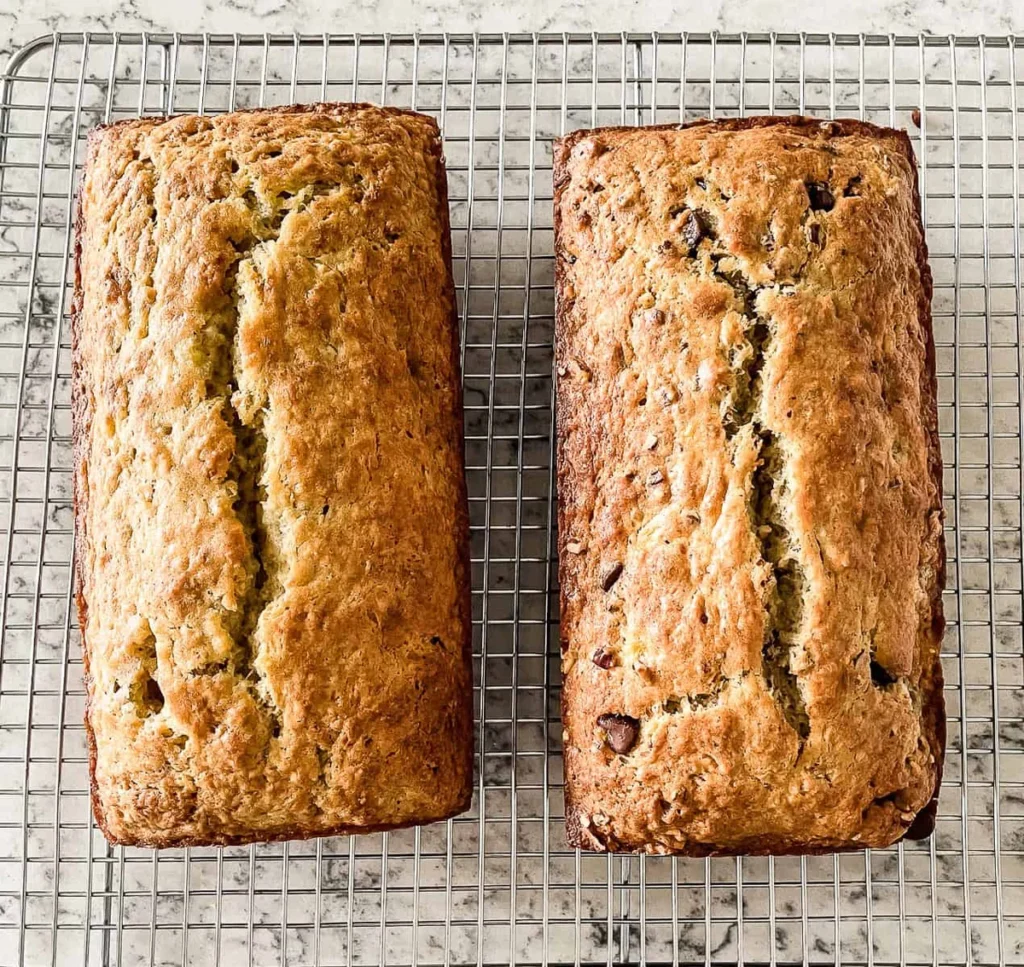
My counter is currently a museum of banana decay. Three bananas, brown as toast, doing their best to look intentional. Next to them sits a jar of sourdough discard that has been patiently waiting for a job. This is the recipe that finally employs both of them.
1 hour start to finish — and it makes two loaves. One to keep, one to share (or freeze, which is what I always actually do).
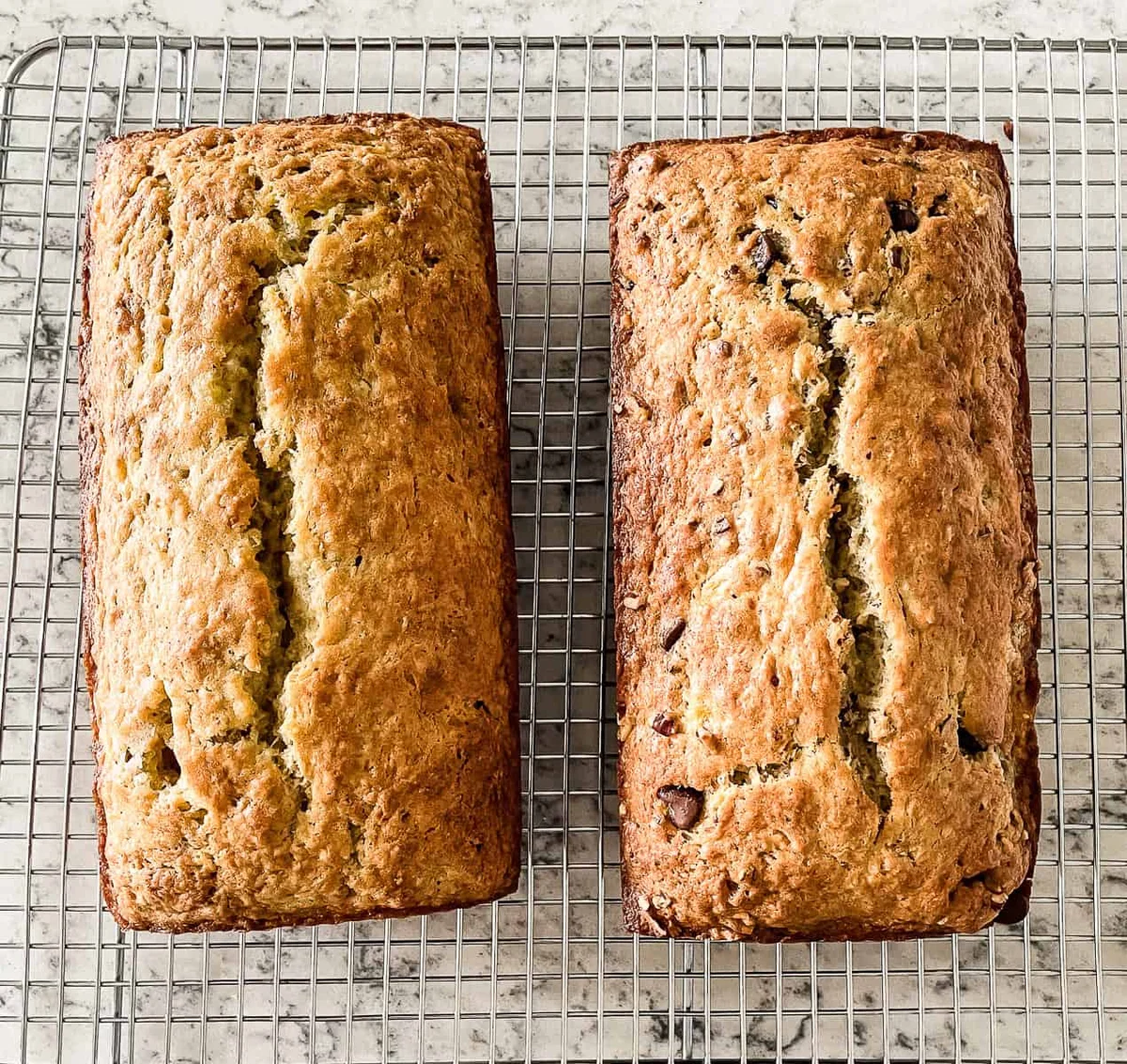
Why this works
Sourdough discard does two things in banana bread: it adds moisture and a gentle tang that takes the edge off the sweetness. You don’t need to feed a starter or wait on a rise — this is a quick bread, so there’s no kneading and no 12-hour ferment. If you can mash a banana, you can make this. That’s the good kind of simple.
What you need
No special tools beyond what’s already in your kitchen. Two standard loaf pans, a hand mixer or a strong arm, and a toothpick for the doneness check.
Ingredients
- 115 g (½ cup) salted butter, softened
- 200 g (1 cup) white sugar
- 140 g (½ cup) sourdough discard — straight from the fridge is fine
- 280 g (1½ cups) mashed overripe bananas (3 large or 4 small)
- 5 ml (1 tsp) vanilla extract
- 2 large eggs
- 250 g (2 cups) all-purpose flour
- 3 g (½ tsp) salt
- 5 g (1 tsp) baking soda
- 2 g (½ tsp) baking powder
Method
- Preheat the oven to 175°C (350°F). Spray two 21×11 cm (8×5 inch) loaf pans with nonstick spray and line the bottoms with parchment paper.
- Mash the bananas with a fork until there are no large lumps. Leave the little flecks — that’s flavour.
- Beat the butter and sugar for 2–3 minutes until pale and creamy, scraping the bowl down once or twice. This softens the sugar crystals, which is why the crumb ends up soft instead of crumbly.
- Add the discard, mashed bananas, vanilla, and eggs. Beat until smooth.
- Whisk the flour, salt, baking soda, and baking powder together in a separate bowl.
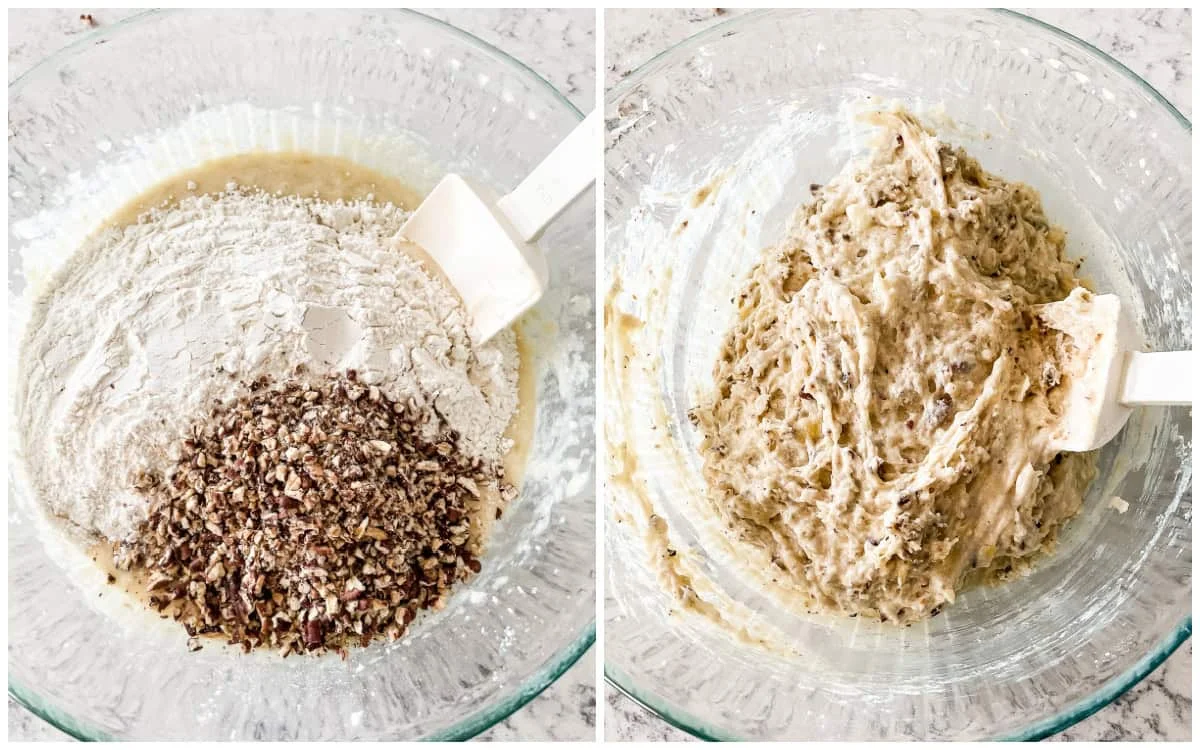
- Stir the dry ingredients into the wet mixture, along with any mix-ins you’ve chosen. Stop stirring the moment no flour streaks are left. Overmixing is the number one way to end up with a dense loaf, so give it a lazy final mix and let it be.
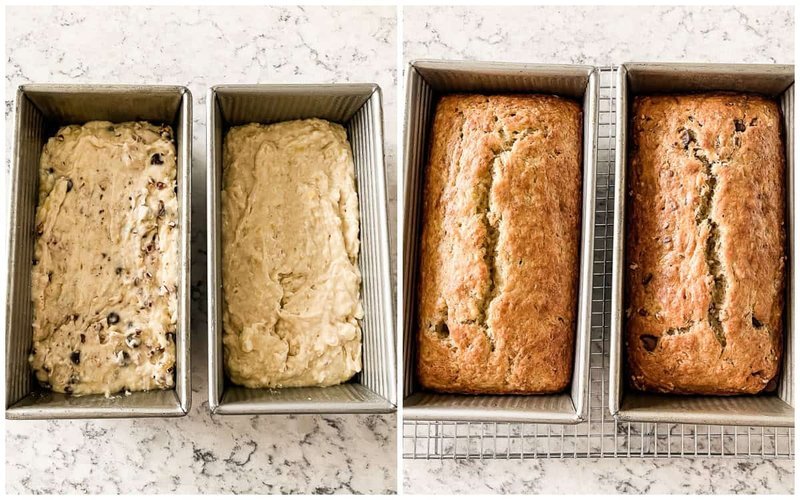
- Divide the batter evenly between the two pans. Bake for 40–45 minutes, until a toothpick comes out with only a few moist crumbs — no wet batter.
- Let the bread cool in the pans for about 10 minutes, then turn it out onto a wire rack. Warm slices are the best kind, but it cuts cleanest once completely cool.
Tips I learned the hard way
The first time I made this, I packed the flour down into my measuring cup and the loaf came out like a brick. Spoon it in, level it off, or weigh it. I weigh mine now.
- Use bananas that are properly brown-spotted. The darker, the sweeter, the better this bakes.
- Don’t rush the creaming step. It’s the only part of this recipe where patience pays.
- Trust the toothpick, not the clock. The moment it comes out clean, pull the pans.
- It keeps well: wrapped, it stays fresh for 3–4 days on the counter, and frozen it lasts 4–5 months.
Make it yours
- Banana nut: stir in 240 ml (1 cup) of toasted pecans or walnuts.
- Chocolate chip: stir in 240 ml (1 cup) of chocolate chips. That’s the loaf I always keep for myself.
- Berry: fold in 240 ml (1 cup) of blueberries, chopped strawberries, or raspberries.
- Cinnamon swirl: spread half the batter in one pan, sprinkle with cinnamon sugar, top with the rest, and drag a knife through in a swirl.
- Tropical: add 120 ml (½ cup) toasted coconut and 120 ml (½ cup) very well-drained pineapple.
- Peanut butter: stir in 160 ml (⅔ cup) of peanut butter chips and layer the batter with swirls of peanut butter.
Can I make it differently?
Active starter instead of discard? Yes — both work. I’ve never once regretted using whatever was in the jar.
Muffins instead of loaves? Absolutely. Divide the batter among 18–20 prepared muffin cups and bake at 175°C (350°F) for 18–20 minutes, until a skewer comes out clean.
One big pan? You can fit this into a single 23×12 cm (9×5 inch) pan, but bake for 55–65 minutes and skip the mix-ins — it tends to overflow with them.
And if it comes out dense? It’s almost always one of two things: overmixed batter, or packed flour. Both are fixable next time.
How we serve it
At our house it goes three ways: fresh from the oven with a proper slab of butter; toasted the next morning with peanut butter (the kids’ vote); and on the rare fancy afternoon, spread with cream cheese. It’s also a fine thing to just eat standing at the counter while it cools, which is how most of it disappears.
Trade-It Tip
No sourdough on hand? Plain yogurt works in a pinch — about 140 g (½ cup) — for similar moisture and a mild tang. It won’t taste exactly the same, but it gets the job done.
If it doesn’t fit a Tuesday night, it doesn’t get published.