
I used to think ‘delicatessen food’ meant standing in a deli queue paying a fortune for a slab of something I could never name. Then I made a country terrine at home and realised how little effort the good kind of simple actually takes.
A terrine is one of the great classics of French charcuterie. Think of it as a rustic country pâté: well-seasoned pork, gently cooked in a loaf tin until it’s tender enough to spread with a knife. The flavour is rich, the texture soft, and the whole thing is far easier to make than most people imagine. I’ve tested it enough times to say it holds its own against the terrines from very fancy French restaurants.
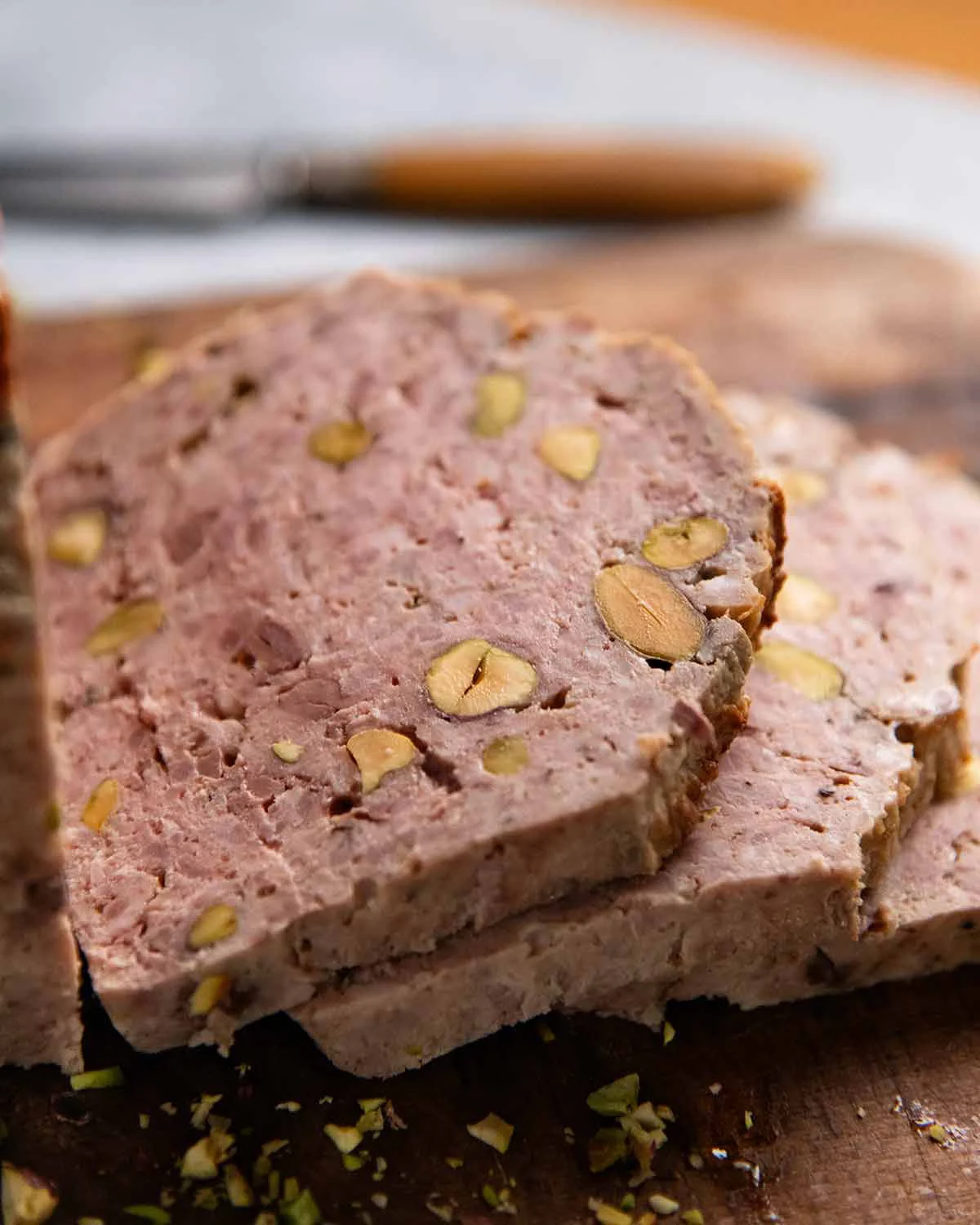
Why this works
Fatty pork keeps the terrine tender and rich as it bakes, and a low, slow temperature in a water bath (bain-marie) stops the edges from drying out before the centre is done. The overnight marinating is what deepens the flavour — skip it and it’s still good, just not nearly as good.
What you need
A word on the name first. It’s called a terrine because it’s traditionally cooked in a deep, covered earthenware dish called a terrine. These days most home cooks — me included — just use an ordinary loaf pan, and the name has stuck.
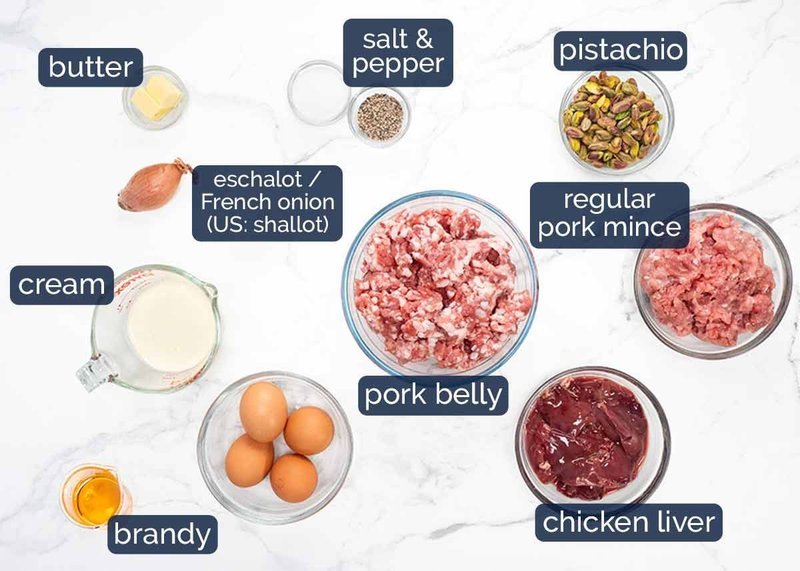
- Pork belly mince (800g / 28oz) — the fat is what makes a terrine a terrine and not a meatloaf. Ask your butcher to mince skinless pork belly for you, or buy pre-minced pork that’s very fatty — pale pink with plenty of white flecks of fat. It looks more crumbly than regular mince. During my testing I also bought very fatty pork mince made from offcuts at a local meat counter, and it worked just as well.
- Regular pork mince (400g / 14oz) — balances the belly so it’s rich without being heavy, and gives the loaf a firmer, meatier bite. Around 15% fat (or lean, around 10%) works.
- Chicken livers (250g / 9oz), cleaned and diced 1cm / 0.4 inch — they add a deep, rustic flavour without tasting strongly of liver; they melt into the mix as it cooks. Trim away any green or yellowish spots (they’re bitter) and obvious sinew. Small bits of membrane are fine — they soften in the oven.
- 1/4 cup brandy — cognac is the classic French choice, but any inexpensive brandy works. No need to get fancy. Non-alcoholic swap: low-sodium chicken stock or a splash of non-alcoholic wine (it just won’t have that subtle depth).
- 4 tsp cooking or kosher salt and 1 3/4 tsp black pepper
- 1 tbsp unsalted butter and 1 eschalot (shallot in the US), finely diced — eschalots are the small onions that are purplish-white inside. They’re sweeter and more delicate than regular onions, and fine enough that they almost melt away in the bake. Don’t confuse them with spring onions, which some shops also call shallots.
- 2 large eggs (55g / 2oz each in shell) and 2 egg yolks — the eggs bind it all together, the extra yolks add richness. Fridge cold is fine.
- 1/2 cup thick cream (heavy cream) — keeps the texture tender; I tested with different amounts and the right one really does make a difference.
- 1/2 heaped cup unsalted pistachios, no need to toast — the classic nut in French terrines. I’d rather leave them out than swap in another nut.
- Optional: 1/8 tsp curing salt (Cure #1) — I don’t use it (see FAQ), but it keeps freshly sliced terrine pink and extends shelf life. The smallest bags are about 500g / 1lb and you only need about 1g, so it’s rather wasteful for one loaf.
- To serve: baguette or crusty bread, Dijon mustard, cornichons or other pickles.
Time, honestly: 30 minutes active, start to finish. But allow 2 days — one night to marinate, one night to chill after baking. The recipe card below does the maths for you.
How to make it
Step 1 — Marinate (do this the night before). Put both pork minces, the chicken livers, salt, pepper and brandy in a large bowl. Mix well with your hands until everything is evenly coated. Cover and refrigerate overnight. No time? You’ll still end up with a good terrine — just a less developed one. The marinade is what gives the flavour depth, so if you have the time, don’t skip it.
Step 2 — Sauté the eschalot. Melt the butter in a small frying pan over medium heat, add the eschalot and cook for about 3 minutes, stirring, until softened but not golden. Set aside to cool slightly.
Step 3 — Mix the terrine. Put the marinated meat in a stand mixer bowl. Add the sautéed eschalot (with the butter), eggs, yolks, cream and pistachios. Mix on low for 30 seconds, then medium for another 30 seconds, until well combined. You want mostly smooth with a slightly coarse texture — that’s what gives it the rustic look and a good bite. Not a stand mixer? Do it by hand in a large bowl: whisk the eggs, cream and eschalot together, add the meat and pistachios, and mix well with your hands. Just don’t use a food processor — it will puree the meat and you’ll get a giant meatball.
Step 4 — Pack the loaf pan. Transfer the mixture into a 21.5 x 11.5 x 7 cm (4.5 x 8.5 x 2.75 inch) loaf pan, one handful at a time, slamming each handful down firmly before adding the next. This packs out air pockets, which is what stops holes and brown spots in the finished loaf. Give the pan a few firm taps on the bench so the mixture settles even more compact.
Step 5 — First bake, in a water bath. Place the loaf pan in a roasting pan and pour in boiling water to come halfway up the sides of the loaf pan. Bake at 220°C / 430°F (200°C fan-forced) for 25 minutes. The gentle hot water bath stops the outside from overcooking while the centre catches up.
Step 6 — Second bake. Reduce the oven to 170°C / 340°F (150°C fan-forced), loosely cover with foil, and cook until the centre reads 68°C / 155°F — about 75 minutes. I don’t recommend making this without a thermometer: take it out at the right temperature and it’s perfect; miss it and you have dry meatloaf. If you only have a regular meat thermometer, first check at 60 minutes.
Step 7 — Rest 2 hours. Leave the terrine in the pan on the bench. You’ll see juices and fat pooling around the edge — the terrine drinks that back in during the rest, which is half the secret to the tender texture. The top will look pale when it comes out of the oven; it darkens as it cools. Don’t panic.
Step 8 — Chill overnight. Wrap the terrine in cling film and refrigerate. As it firms up, the flavours meld — and honestly, it’s often better on the second or third day.
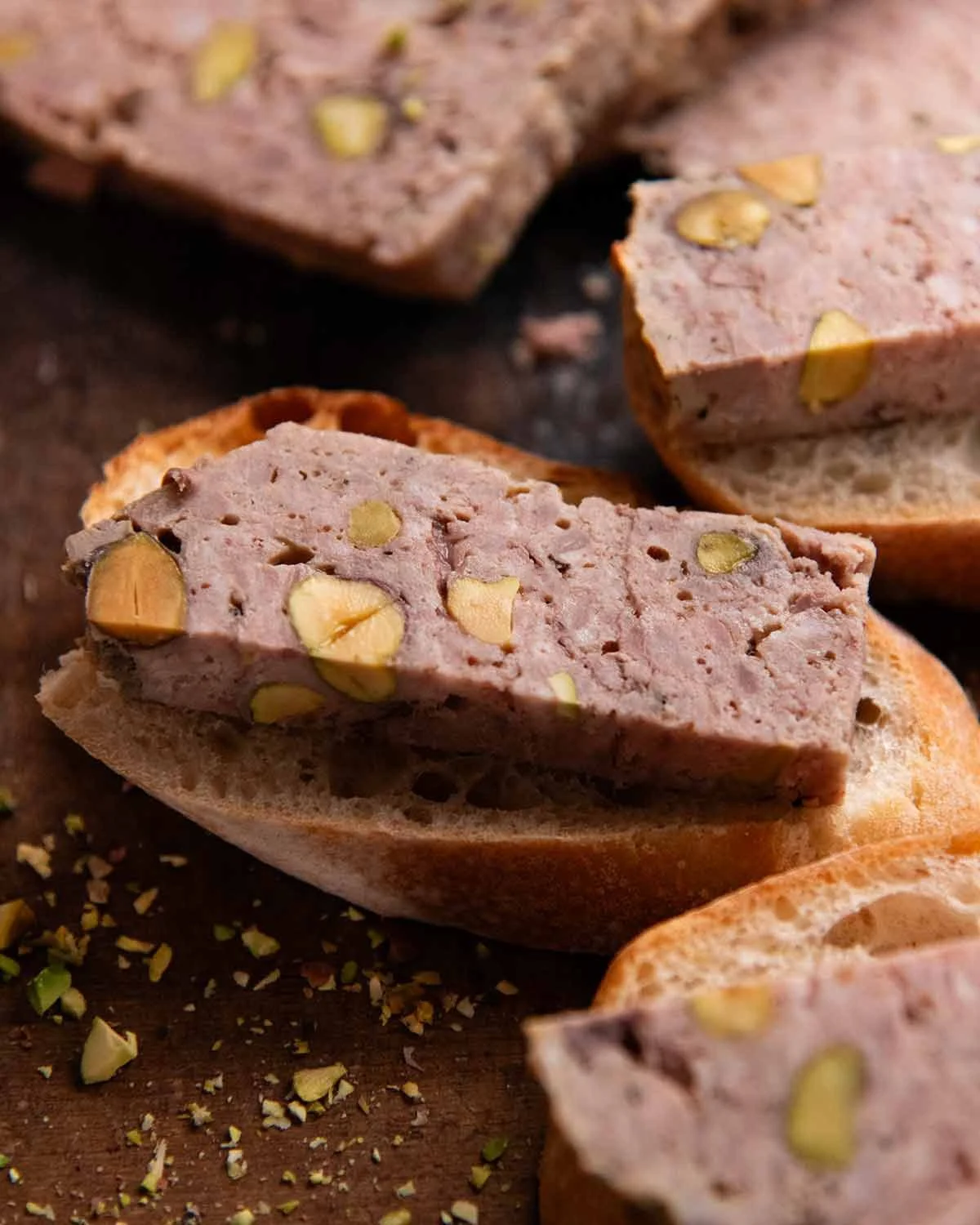
Step 9 — The big reveal. The chilled fat will have glued the terrine to the pan, so it won’t slide out on its own. Run a blowtorch over the outside of the pan to gently soften the fat around the edges, then invert and give it a gentle shake. No torch? Dip the outside of the pan in hot water for a few seconds, or warm it briefly over a low flame. Then slice to about 1cm / 0.4 inch thick. If the pink blush fades once you slice, that’s completely normal — the cut surface oxidises in the air. It still tastes just as good.
Serving, storage, and what to expect
Keep the whole loaf in the fridge and slice as you go — that’s how French delis do it. Serve it fridge-cold, or let it sit out a little if you prefer it softer. At our table, it’s usually the centrepiece: a baguette torn open, some Dijon and pickles on the side, and everyone helps themselves. It works as a light lunch with a simple green salad, a start, on a cheese board, as little canapés on toasted bread, or packed for a picnic. There’s really no wrong time to eat one.
Storage: in an airtight container in the fridge for up to 5 days. It freezes well too — slice first, wrap the slices individually, and thaw only what you need for up to 3 months. Sliced terrine does lose a little of its silky texture after thawing, but it’s still good.
And the money question: a good French-style terrine at a deli can cost around $15 for a 150g slice. This loaf costs less than $30 to make, weighs a generous 1.5kg, and serves 15 slices. That’s the 80% difference the shop doesn’t advertise.
FAQ
Where do I find fatty pork belly mince? It’s easier to find than you’d think — most butchers will mince skinless pork belly for you on request. I also found very fatty offcut pork mince that worked just as well and was surprisingly inexpensive.
Can I use a different meat? You can, but don’t expect the same result. Pork has the right balance of flavour and fat for that rich, juicy texture. Other meats give you a leaner, firmer loaf — good, just not a country terrine.
Can I skip the chicken livers? Yes, but it’ll be a little less rich and refined. The livers are what make a country terrine a country terrine. The rest of the recipe works fine without them.
What is curing salt? A special salt (pink curing salt) charcuterie makers use to keep cured meats like ham, bacon, salami and terrines pink and to extend shelf life. Use Cure #1 for cooked charcuterie like this; Cure #2 is for dry-cured products like salami and isn’t right here. I skip it because this terrine is made to be eaten within a few days, and it still has a lovely blush pink centre when freshly sliced.
Terrine, pâté, or pâté en croûte — what’s the difference? A terrine is a coarse, rustic mixture of meat cooked in a loaf-shaped mould, with visible pieces of meat, served cold or at room temperature in slices. A pâté is a broader term for many meat preparations, often much smoother because the meat is blended into a fine paste. A pâté en croûte takes things further: a terrine or rustic pâté baked inside a pastry crust, then finished with a savoury jelly for those signature beautiful slices. You’ll see them in French delis and charcuterie shops — and they’re genuinely stunning.
A note from my kitchen
I made this terrine more than 40 times before I was happy with it — different binders, different amounts of fat, different aromatics, different cook times. At one point I had so many in the fridge there was no room for anything else, and I started calling it The Terrine Fridge. This is the version I landed on: rich, full of flavour, and the good kind of simple. My only regret is that I can’t remember which of the 40 was my favourite — this one, apparently, since it’s the only one I’m writing down.
Trade-It Tip: No brandy on hand? A splash of non-alcoholic wine or low-sodium chicken stock keeps the moisture without changing anything else. And if the pistachios are gone, leave them out rather than swapping in almonds — it’ll still be delicious.
If it doesn’t fit a Tuesday night, it doesn’t get published. This one fits a weekend afternoon instead — and it keeps for 5 days, so the whole week gets the credit.
Recipe card
- Serves: 15 slices (1.5kg loaf)
- Prep: 30 minutes
- Cook: 1 hour 40 minutes
- Marinating + resting: 2 days
- Total: 2 days 2 hours 10 minutes
- Type: Appetizer, party food, starter · French
- Marinade: 800g / 28oz pork belly mince · 400g / 14oz regular pork mince · 250g / 9oz chicken livers, cleaned and diced 1cm / 0.4 inch · 4 tsp cooking or kosher salt · 1 3/4 tsp black pepper · 1/4 cup brandy (cognac preferred) · optional 1/8 tsp curing salt (Cure #1)
- Terrine mixture: 1 tbsp unsalted butter · 1 eschalot (shallot), finely diced · 2 large eggs · 2 egg yolks · 1/2 cup thick (heavy) cream · 1/2 heaped cup unsalted pistachios
- To serve: baguette or crusty bread · Dijon mustard · cornichons or pickles
- Method (abbreviated): Marinate the meat overnight. Sauté the eschalot in butter for 3 minutes. Combine with the marinated meat, eggs, yolks, cream and pistachios; mix briefly. Pack into a loaf pan. Bake 25 minutes at 220°C / 430°F (200°C fan) in a water bath, then cover with foil, reduce to 170°C / 340°F (150°C fan) and cook until the centre reaches 68°C / 155°F (about 75 minutes). Rest 2 hours, chill overnight, then slice about 1cm / 0.4 inch thick.
- Nutrition per slice: 428 cal · 1g carbs · 14g protein · 40g fat · 676mg sodium
Don’t attempt this without a thermometer. Removing the terrine at exactly the right temperature is the key to the blushing pink centre and the perfect texture.