
I used to think a restaurant-quality shrimp scampi meant three pans, a bottle of wine I didn’t want to drink, and a sauce that tasted like I’d stirred a stick of butter into a pot of water. Then I figured out the version I actually make at home — less butter, more olive oil, a squeeze of fresh lemon, and a pan of linguine that’s ready before the pasta finishes boiling. It’s the good kind of simple.
This is the dish I reach for when I want dinner to feel a little fancy without me having to dress up the kitchen. Shrimp get a quick sear, the garlic goes fragrant, the sauce simmers down for just a couple of minutes, and everything comes together in the same skillet. 30 minutes total, start to finish, prep and all.
Why this works
Shrimp cook in a couple of minutes and hold their flavor better when the sauce is light, so we swap most of the butter for olive oil and let lemon, garlic, and a little white wine do the talking. The result is a silky sauce that clings to the pasta without weighing the plate down. Shrimp also give you a lot of protein for very few calories, which is why this one keeps coming back to our table.
What you’ll need
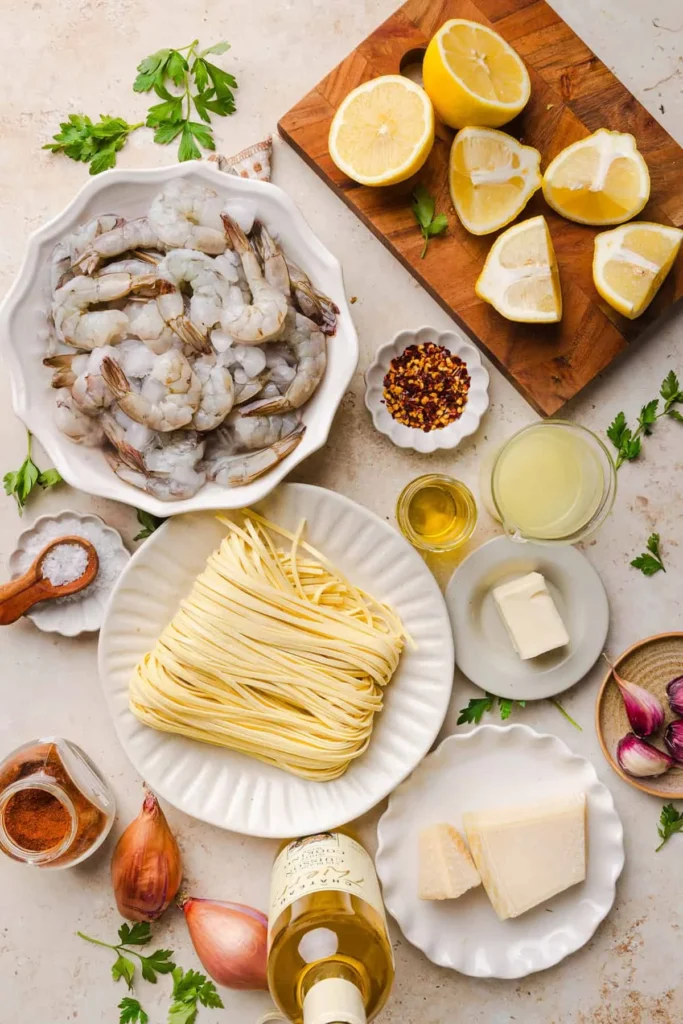
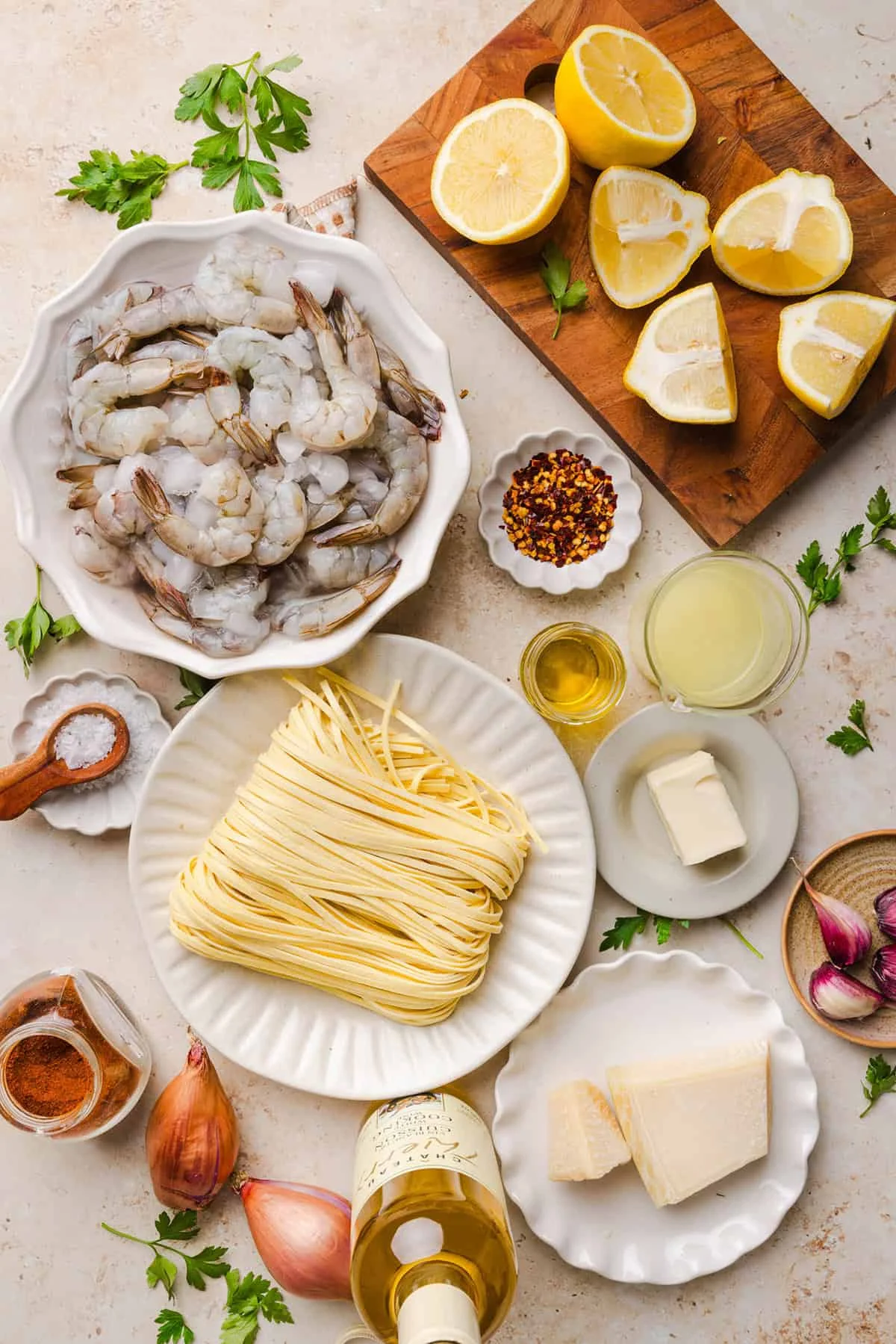
I keep this list short on purpose. If you have a lemon and a jar of red pepper flakes, you’re 90% of the way there.
- 12 oz linguine — I use whole wheat, but spaghetti, fettuccine, or angel hair work fine too
- 1 1/2 lbs large shrimp, peeled and deveined — fresh or frozen, thawed completely if frozen
- 1/2 tsp each salt and black pepper
- 1/4 tsp paprika
- 3 Tbsp salted butter
- 2 Tbsp olive oil
- 2 medium shallots, finely chopped
- 6 cloves garlic, minced fresh
- 1/2 tsp crushed red pepper flakes
- 1/3 cup chicken broth (vegetable broth works too)
- 1/4 cup dry white wine — Sauvignon Blanc, Pinot Grigio, or Chardonnay
- 1 large lemon, zest and juice (about 3 Tbsp of juice)
- 2 Tbsp fresh parsley, finely chopped
- 2 Tbsp freshly grated Parmesan
A couple of notes on the list: jarred garlic is an emergency, not a plan — fresh is what makes scampi taste like scampi. And grate your own Parmesan; the pre-shredded stuff doesn’t melt the same way and can leave the sauce grainy.
How to make it
- Cook the pasta. Bring a large pot of salted water to a boil and cook the linguine until al dente according to the package. Before you drain it, scoop out 1/2 cup of the starchy pasta water and set it aside — that’s the secret to a silky sauce.
- Season the shrimp. Pat them thoroughly dry with paper towels, then season both sides with the salt, pepper, and paprika. Dry shrimp sear properly; wet ones steam and the sauce turns watery.
- Soften the aromatics. Heat the olive oil and butter in a large skillet over medium heat. Add the shallots and cook 2 to 3 minutes until soft, then stir in the garlic and red pepper flakes and cook 30 more seconds until fragrant.
- Cook the shrimp. Add them in a single layer and cook 1 to 2 minutes per side, just until pink and opaque. Pull them out onto a plate — they’re done the moment they curl into a loose “C” shape, and they keep cooking on the plate. Trust me, I’ve eaten rubbery shrimp more than once to learn this.
- Make the sauce. Pour in the chicken broth, white wine, lemon juice, and zest, scraping up the browned bits from the bottom of the pan. Let it simmer 2 to 3 minutes until it’s slightly reduced.
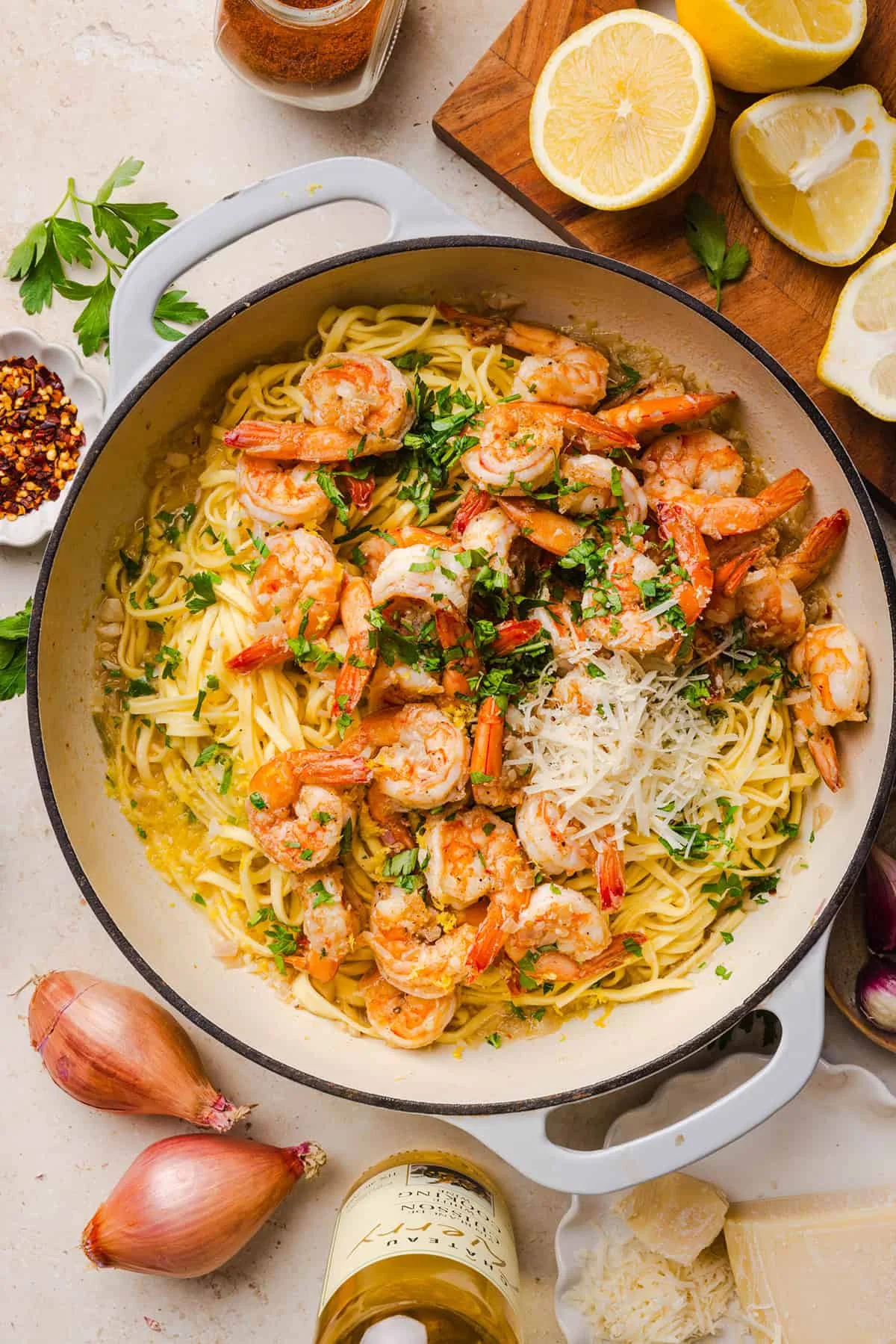
- Toss it together. Return the shrimp to the skillet with the cooked pasta and toss, adding a splash of the reserved pasta water as needed until the sauce coats everything lightly.
- Finish and serve. Stir in the Parmesan and parsley, taste, and fix the seasoning with a little more salt or a squeeze of lemon if it needs it. Serve right away with extra Parmesan and lemon wedges.
Tips that actually matter
- Don’t overcook the shrimp. Pink, curled, and just opaque means done. Overcooked means rubbery, and no amount of lemon fixes that.
- Reserve plenty of pasta water. The starch in it is what makes the sauce cling to the noodles instead of pooling in the bowl.
- Simmer the sauce gently. A slow simmer lets the wine cook down and the sauce stay light and balanced.
- Fresh lemon, no exceptions. The juice and the zest together are what make this taste bright instead of just garlicky. Bottled juice can’t do that.
- Pick good shrimp. Wild-caught has the best flavor, but any quality shrimp works — you’re not going to notice a difference in a pan full of garlic and lemon.
Swap it, if you need to
This recipe is built to be bent, not broken:
- No gluten-free pasta on hand? Use your favorite gluten-free variety instead — the sauce doesn’t care.
- Want fewer carbs? Swap all or half the linguine for zucchini noodles, or skip the pasta entirely and serve the shrimp over steamed broccoli or cauliflower rice.
- Add vegetables. Spinach, asparagus, cherry tomatoes, broccoli, or mushrooms all stir in nicely for extra color and volume.
- Different protein? Scallops, chicken, or salmon work in the same garlic-lemon sauce. I’ve even done it with chunks of lobster when we wanted to feel fancy.
- Not cooking with wine? Use extra chicken broth plus another squeeze of lemon juice. You lose a little brightness, but it still works.
What to serve alongside
- A simple green salad or a Mediterranean chopped salad keeps the plate light.
- Roasted asparagus, sautéed spinach, or roasted broccoli go beautifully with it.
- You will want bread for soaking up the sauce. Warm whole grain bread or a crusty sourdough is the move.
Questions I get asked
Can I use frozen shrimp? Absolutely. Thaw them in the refrigerator overnight (or under cold running water), pat them dry, and go on with the recipe exactly as written.
What if I don’t have wine? Replace it with extra chicken broth and an extra tablespoon of lemon juice. The sauce loses a little depth but stays bright.
How do I know the shrimp are done? Opaque, pink, and curled into a loose “C” — usually 1 to 2 minutes per side depending on size. That’s the whole trick.
Can I use pre-cooked shrimp? You can, but raw shrimp taste better. If you’re using cooked shrimp, add them at the very end just long enough to warm through.
Can I make this dairy-free? Yes — swap the butter for extra olive oil and either skip the Parmesan or use your favorite dairy-free alternative.
Why is my sauce watery? It probably didn’t reduce long enough, or too much pasta water got in. Simmer the sauce a few minutes before the pasta goes in, then add the pasta water gradually until it’s the right consistency.
Can I make it ahead? The dish is best fresh — shrimp cook so fast. But you can prep the garlic, shallots, and lemon an hour ahead so dinner comes together in minutes.
Leftovers and storage
Leftovers keep in an airtight container in the refrigerator for up to 3 days. To reheat, warm gently in a skillet over medium-low heat with a splash of broth or water to loosen the sauce — don’t crank the heat or the shrimp will get rubbery. You can freeze the shrimp and sauce for up to 2 months, but the pasta softens after thawing, so freeze the sauce and make fresh pasta when you’re ready to eat.
A note from Grace
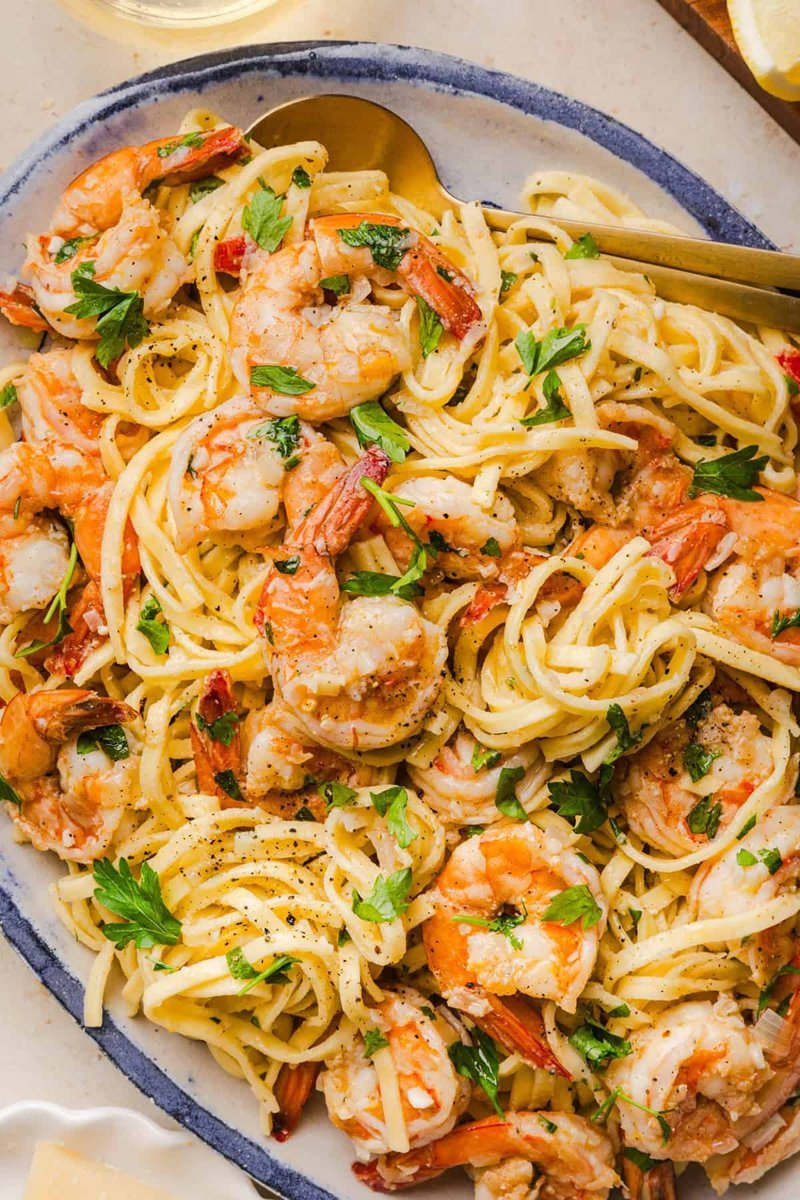
This is one of those recipes that looks like it took effort and really didn’t. One pot of pasta, one skillet, 30 minutes on the clock. The lemon and garlic do the heavy lifting, and the pasta water is the trick that makes it feel restaurant-quality without the restaurant bill.
Trade-It Tip: No white wine on hand? Extra chicken broth plus an extra squeeze of lemon juice does the job — same brightness, no alcohol.
If it doesn’t fit a Tuesday night, it doesn’t get published.
Nutrition per serving (recipe makes 6): 425 kcal, 36 g carbs, 34 g protein, 15 g fat, 6 g fiber. Numbers are auto-calculated, so treat them as a guide rather than gospel.