
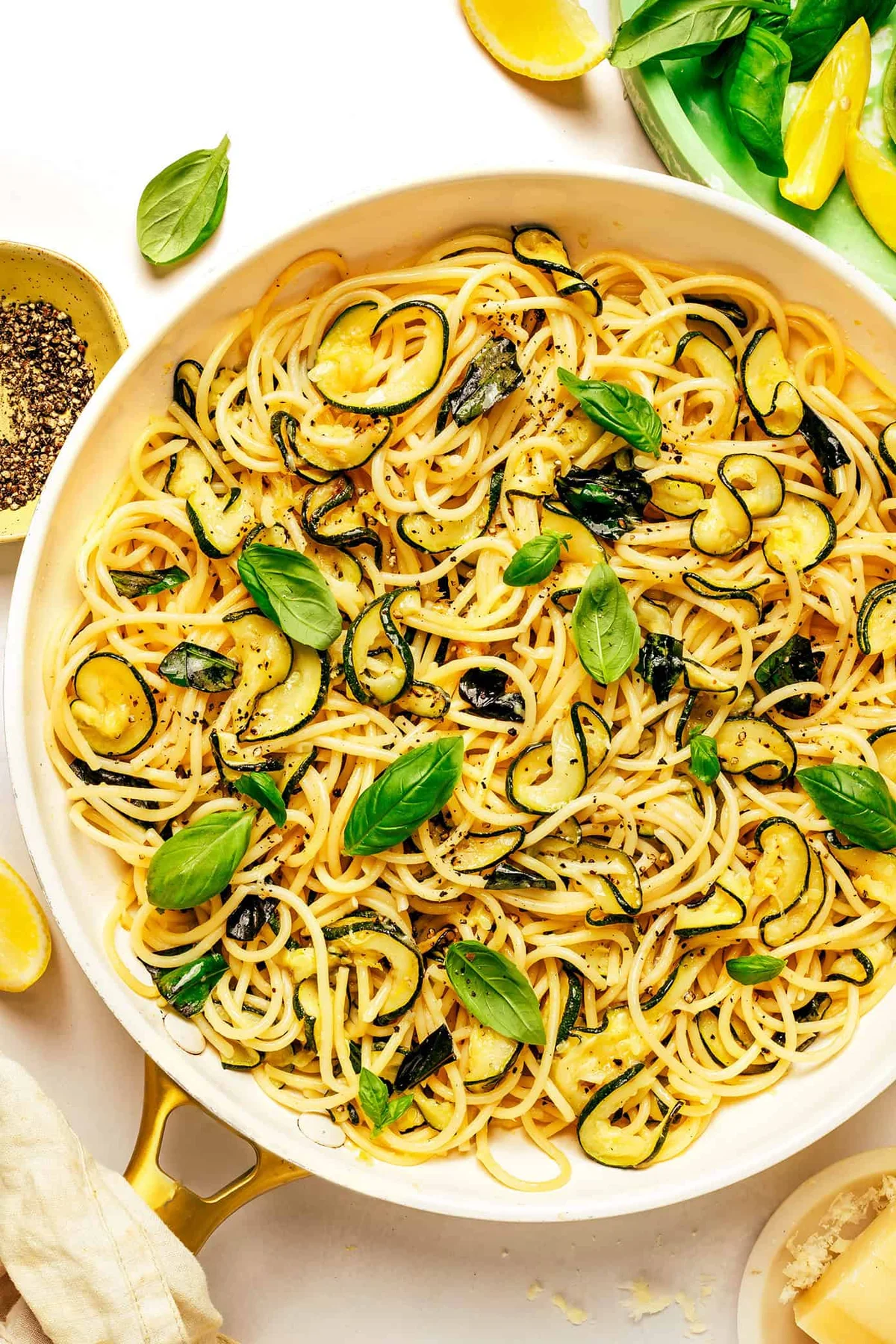
I used to think a proper summer pasta meant three pots, a spiralizer, and a sink full of dishes. Then I discovered spaghetti alla Nerano — a pasta made with little more than zucchini and cheese — and my whole idea of ‘healthy dinner’ changed.
It started years ago, back when Stanley Tucci was raving about it and everyone (myself included) wanted to know how zucchini and Parmesan could possibly be that good. The hype was justified. It’s been on repeat at our table every summer since, and my version has wandered in its own direction: Parmesan, fresh basil, red pepper flakes, and a whole lot of lemon. That’s what this recipe is. The good kind of simple — the kind where one pot of pasta and a deep skillet do all the work.
Why this works
Frying is what makes zucchini go deeply golden, sweet, and almost jammy — that’s the flavor no sauté can give you. Then the fried slices hit the starchy pasta water and Parmesan and literally melt into a silky sauce. It takes about 20 minutes at the stove with a slotted spoon, and it’s the difference between a fine zucchini pasta and one you’ll be thinking about for days.
Equipment
- Mandoline
Ingredients
- 8 ounces spaghetti
- 3 medium zucchini (~20 ounces), very thinly sliced
- 1 ½ cups neutral oil or olive oil, for frying
- 2 tablespoons extra-virgin olive oil
- 2 large cloves garlic, peeled and lightly smashed
- ¼ teaspoon crushed red pepper flakes, or more to taste
- 1 teaspoon lemon zest + 2 tablespoons freshly-squeezed lemon juice
- ⅔ cup freshly-grated Parmesan, plus extra for serving
- ¼ cup fresh basil leaves, torn, plus extra for serving
- fine sea salt and freshly-ground black pepper
Instructions
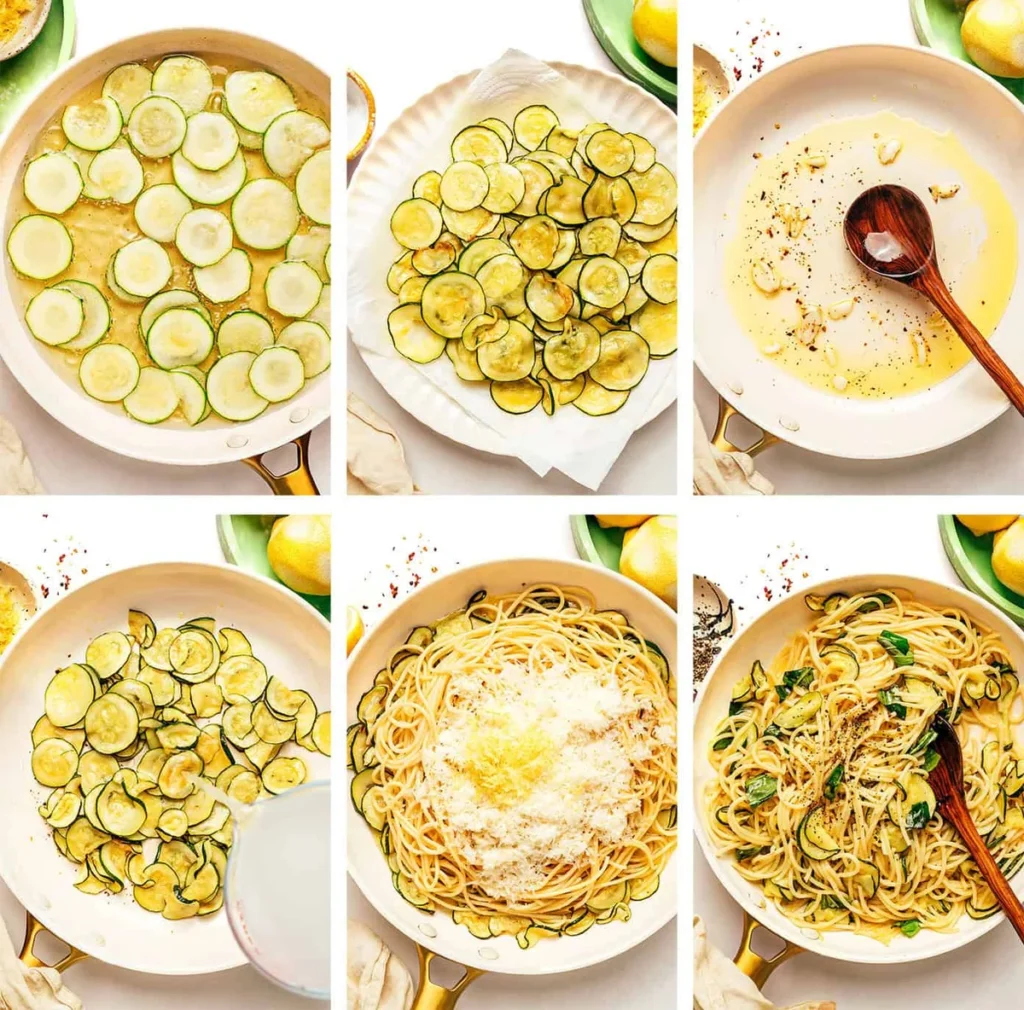
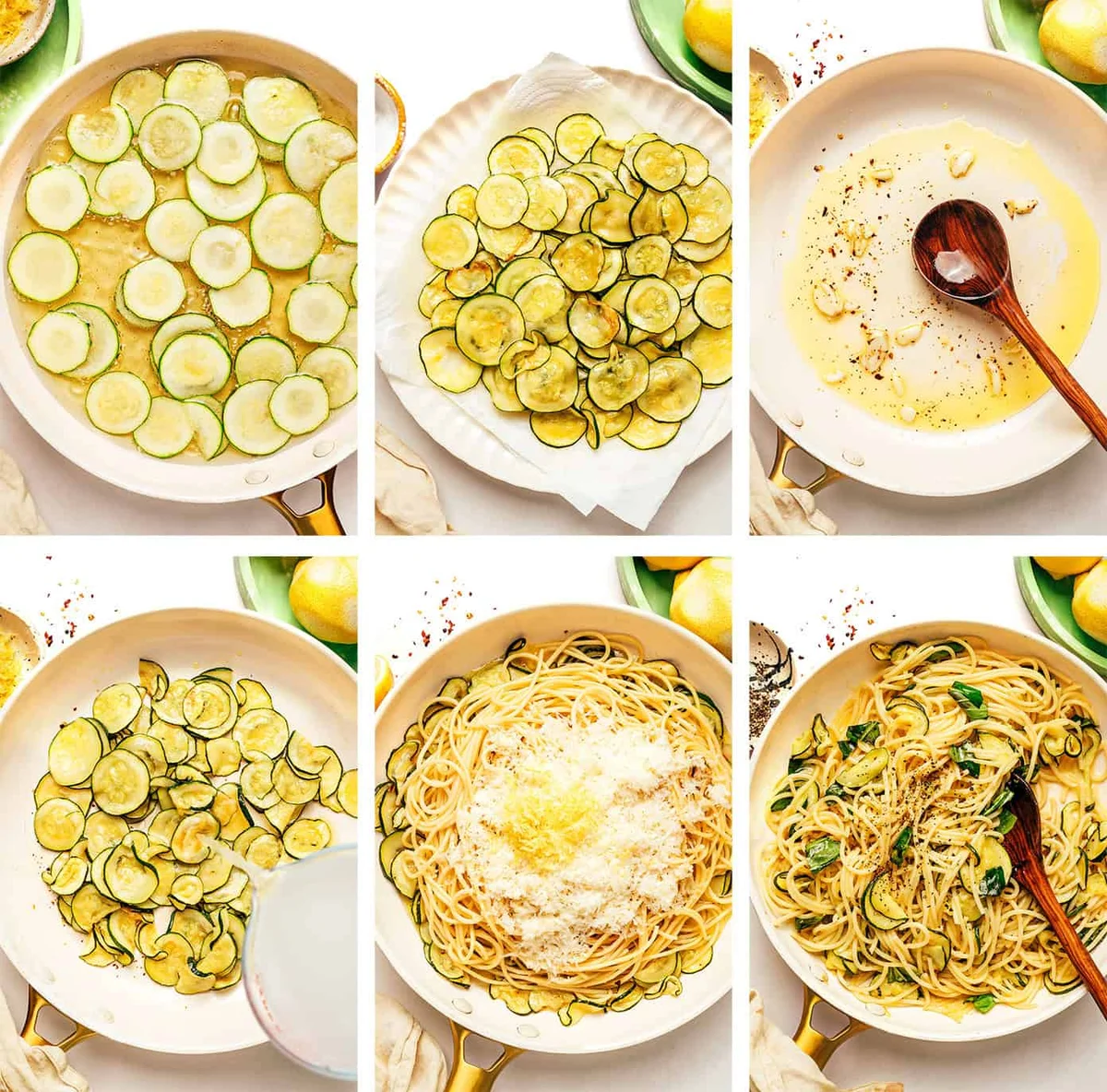
- Slice the zucchini. Cut the zucchini into very thin rounds, about ⅛-inch thick or slightly thinner. A mandoline is very helpful here so the slices cook evenly.
- Heat the oil. Add the frying oil to a large sauté pan or skillet — you want enough to coat the bottom of the pan by about ½ inch. Heat over medium to medium-high until the oil reaches 350°F to 365°F. No thermometer? Drop in one slice: it should sizzle right away.
- Fry the zucchini. Working in batches so the pan isn’t crowded, add a single layer of slices to the hot oil. Fry for 2 to 4 minutes, flipping occasionally, until tender and lightly golden. Some slices will go deeper gold than others — that’s great — but avoid dark brown, which turns bitter.
- Drain and season. Lift the zucchini out with a slotted spoon and set it on a paper-towel-lined plate. Sprinkle lightly with salt. Repeat with the remaining zucchini, keeping the oil around 350°F and adding a little more oil if the pan gets too dry.
- Let the zucchini rest. This step is optional but very helpful: let the fried zucchini sit for at least 30 minutes, or refrigerate it for a few hours. It softens as it rests, which is what helps it melt beautifully into the sauce. You can fry the zucchini up to one day ahead.
- Cook the pasta. Bring a large pot of generously-salted water to a boil and cook the spaghetti until just shy of al dente. Before draining, reserve at least 1 cup of the starchy pasta water.
- Infuse the oil. While the pasta cooks, heat the extra-virgin olive oil in a large skillet or Dutch oven over medium heat. Add the smashed garlic and cook for 1 to 2 minutes, until fragrant. Add the red pepper flakes and cook for 30 seconds, then fish out and discard the garlic.
- Build the sauce. Add the fried zucchini to the skillet with a generous splash of the starchy pasta water. Once the spaghetti is just barely al dente, add it to the skillet along with the lemon zest, lemon juice, Parmesan, and basil. Toss quickly and continuously, splashing in more pasta water as needed, until the cheese melts into a silky sauce. Season with black pepper and extra salt, lemon juice, or red pepper flakes to taste.
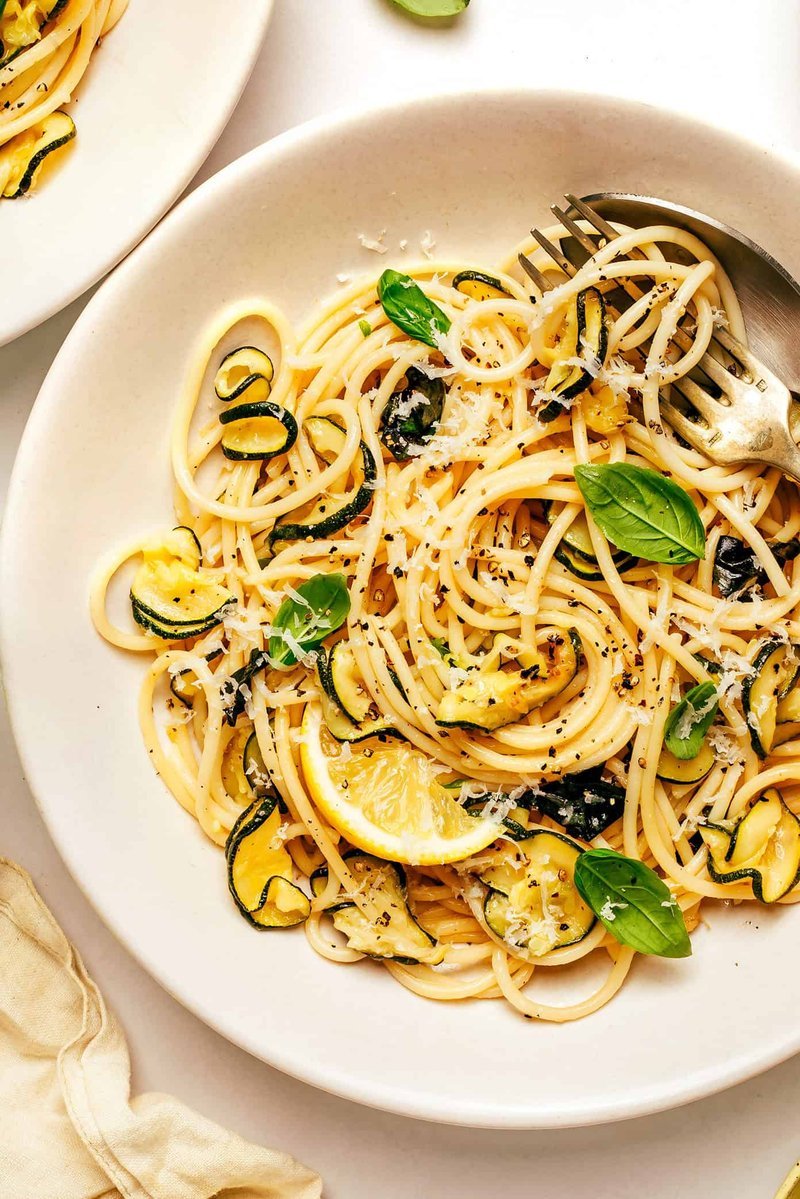
- Serve. Plate it up with extra basil, Parmesan, black pepper, and a final sprinkle of lemon zest. Eat it immediately — this is a Tuesday-night recipe, not a wait-and-see.
Recipe tips
A few small details make a big difference here, especially with the zucchini and that silky Parmesan sauce.
- Slice thin and even. A mandoline is your best friend here. Hand-slicing works too, just take your time.
- Don’t crowd the pan. It’s tempting to dump it all in at once, but frying in batches keeps the oil hot and gives you golden slices instead of soggy, oil-logged ones.
- Watch the oil. You’re aiming for 350°F to 365°F. If a test slice sizzles right away, you’re good to go. If it sits there quietly, wait a bit longer.
- Save more pasta water than you think you need. At least a cup. That starchy water is what turns the Parmesan into a silky sauce instead of a clumpy mess — and you’ll want extra splashes as you toss.
- Undercook the spaghetti slightly. It finishes cooking in the skillet with the sauce, so pull it just shy of al dente and it’ll be perfect by the time it hits your plate.
Make it your own
Feel free to wander. A few ideas that work:
- Classic Nerano-style: Swap the Parmesan for grated provolone del Monaco (or a mix of provolone and Parm) and skip the lemon and red pepper flakes for the traditional version.
- Add burrata: Tear a ball over each serving for an extra-creamy finish.
- Add protein: Toss in grilled shrimp or chicken for something heartier.
- Make it spicier: Double the red pepper flakes, or drizzle a little Calabrian chili oil over the top before serving.
- Swap the herbs: Fresh mint instead of basil is so good with zucchini — or do a mix of both.
- Add crunch: Sprinkle garlicky toasted panko over each bowl.
FAQ
Do I really have to fry the zucchini? For this recipe, yes — the frying is what gives the zucchini that deep, sweet, golden flavor that makes the sauce special. If you’d rather skip it, sauté the zucchini in a few tablespoons of olive oil until very soft and golden. The sauce won’t be quite as rich, but it’s still tasty.
Can I make any of this ahead? Yes, and the fried zucchini actually benefits from it. Fry it up to a day in advance, store it covered in the fridge, and let it come toward room temp before building the sauce.
What do I do with the leftover frying oil? Once it’s fully cooled, strain it through a fine-mesh sieve and store it in a jar. You can reuse it once or twice for frying or sautéing vegetables.
My sauce turned clumpy instead of silky. What happened? Usually the pan was too hot when the cheese went in, or there wasn’t enough pasta water. Keep the heat at medium or lower when tossing, add the cheese gradually, and keep splashing in pasta water while tossing continuously until everything comes together.
Trade-It Tip: No mandoline? A very sharp knife and a steady hand work — just slice as evenly as you can so everything fries at the same rate.
If it doesn’t fit a Tuesday night, it doesn’t get published.
— Grace