
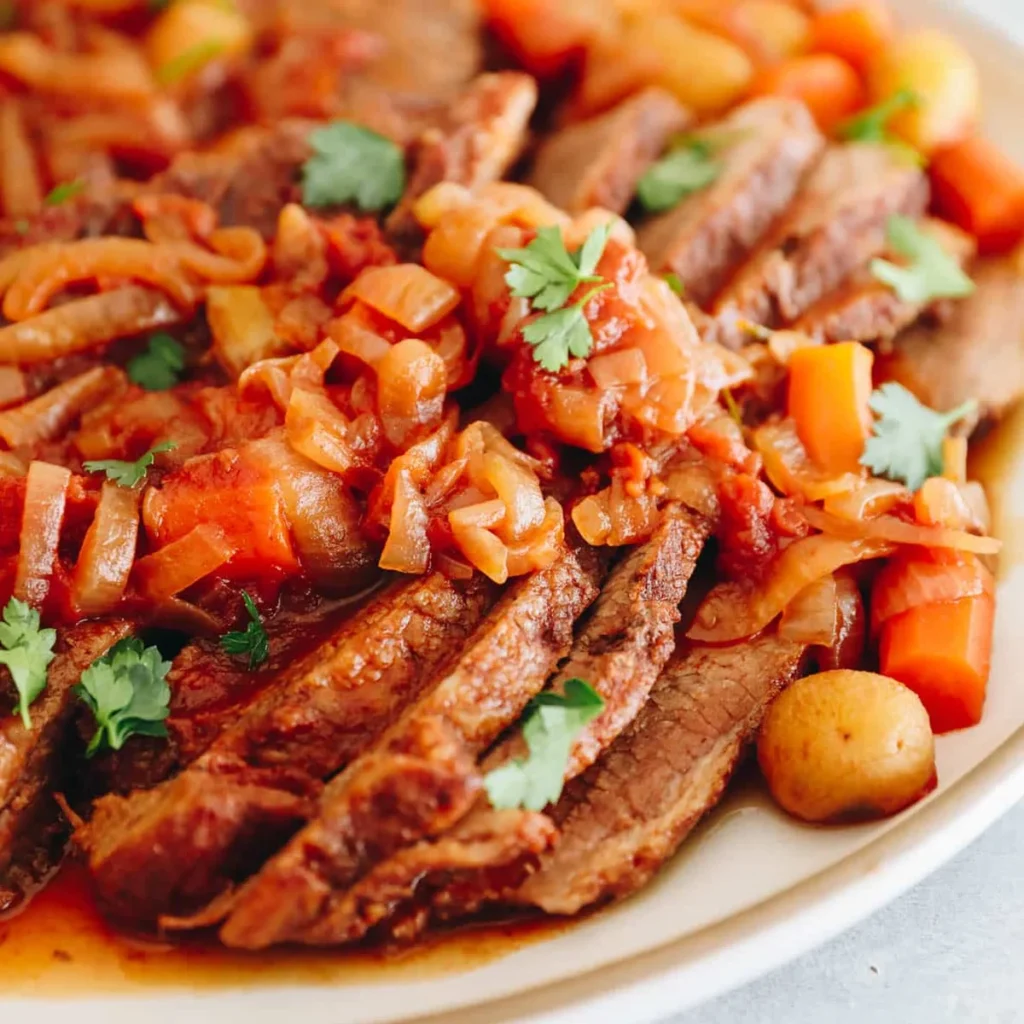
I used to think a brisket was a smoker person’s project. Then I spent a few weeks in my kitchen perfecting this oven version and realized the whole thing is one pot, one sauce, and a very patient oven.
This is a classic Jewish oven-braised brisket, the kind that’s on the table for Passover or Rosh Hashanah. Mine started as my bubby’s recipe, which, to be fair, included a ton of ketchup and I’m pretty sure some cola, too. This is my take on it. It comes out tender, sweet, and saucy, and it’s the kind of dinner that makes a house smell like a holiday even when it isn’t one.
Why this works
Brisket is one of the toughest cuts on the cow, packed with connective tissue. Cook it slowly enough and that tissue breaks down into gelatin, which is exactly why the meat feels so tender and the sauce gets all glossy and rich.
What you’ll need
A dutch oven is the easiest way to do this, but a large oven-safe pot or a big aluminum pan tented with foil works just as well. Here’s the shopping list:
- 5–6 lb (2.3–2.7 kg) beef brisket, point cut if you can find it — it’s juicier. Flat cut works too.
- 1 tbsp (15 ml) kosher salt
- 1 tsp (5 ml) black pepper
- 1 tsp (5 ml) smoked paprika (sweet paprika works too)
- 10 garlic cloves, peeled and kept whole
- 2 tbsp (30 ml) olive oil, divided
- 2 large sweet onions, sliced (yellow onions are fine)
- 6 oz (170 g) tomato paste, about a small can
- 14.5 oz (410 g) can of diced or crushed tomatoes
- ¼ cup (60 ml) pure maple syrup — brown sugar works if you prefer
- 2 cups (480 ml) beef stock
- 1 cup (240 ml) red wine, any you have in the cupboard
- 4 carrots, peeled and chopped into even pieces
- 1 lb (450 g) baby potatoes, whole
- ¼ cup (30 g) fresh herbs — thyme, rosemary, sage, whatever you like
Yields 10 servings. Prep time is short; the real time is an overnight dry brine and about 3 hours in the oven. I count the total at roughly 15 hours, but most of that is the fridge doing its job while you sleep.
Make it
1. Dry brine it
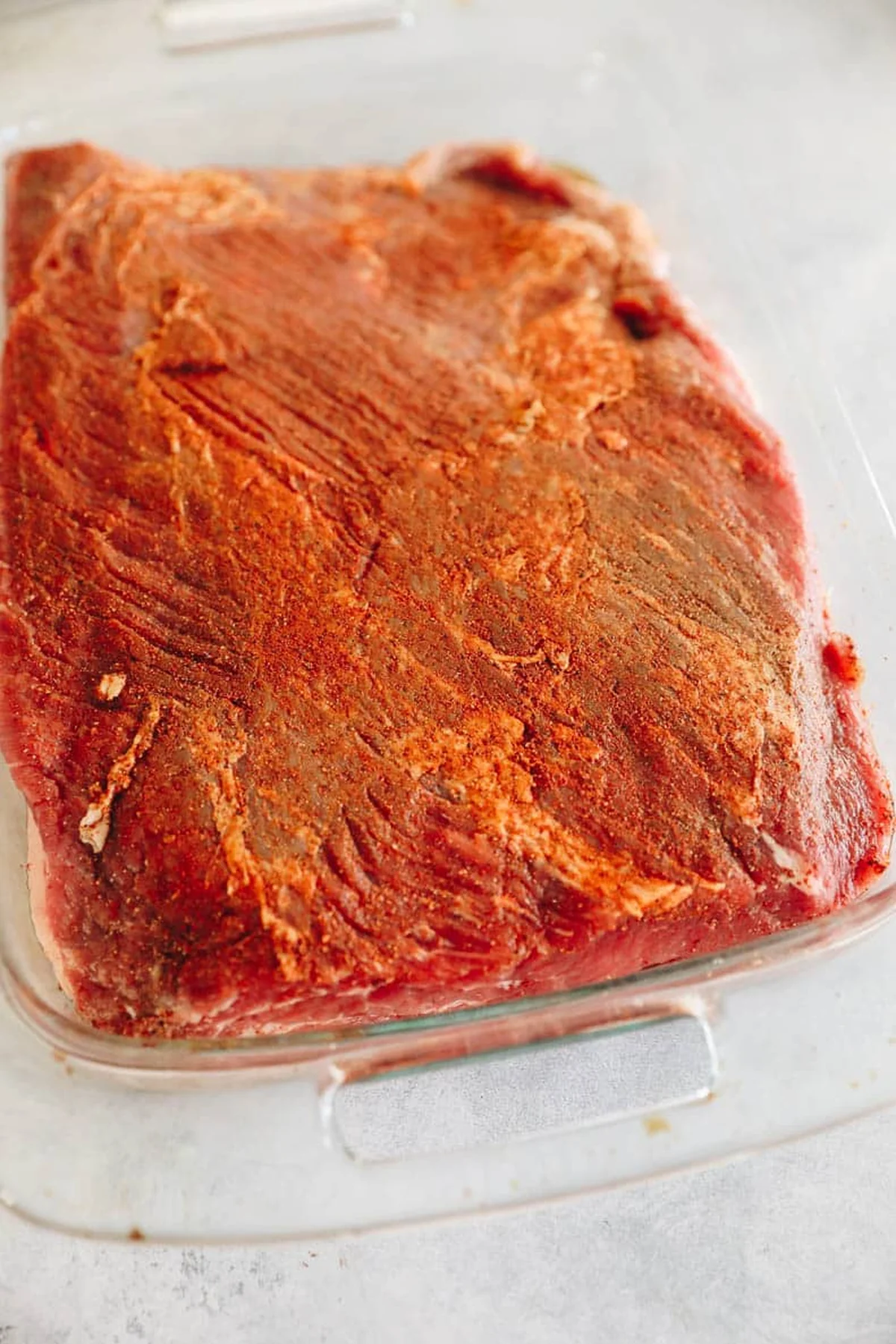
Lay the brisket on a baking sheet and coat it all over with the salt, pepper, and paprika. Rub it in with your hands. Cover and refrigerate overnight. Take it out 1 hour (30 minutes is the minimum I’d allow) before you start cooking.
2. Sear it
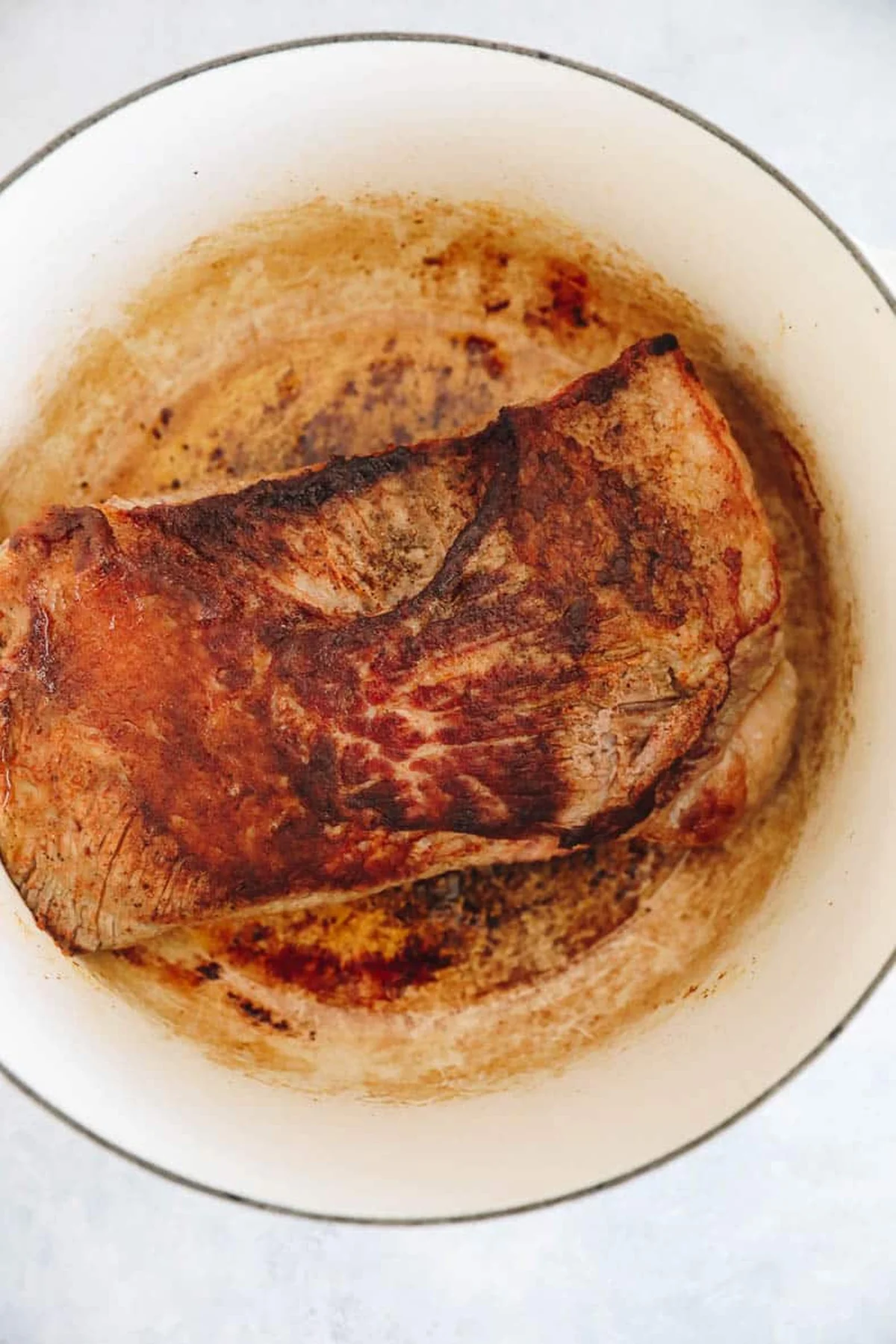
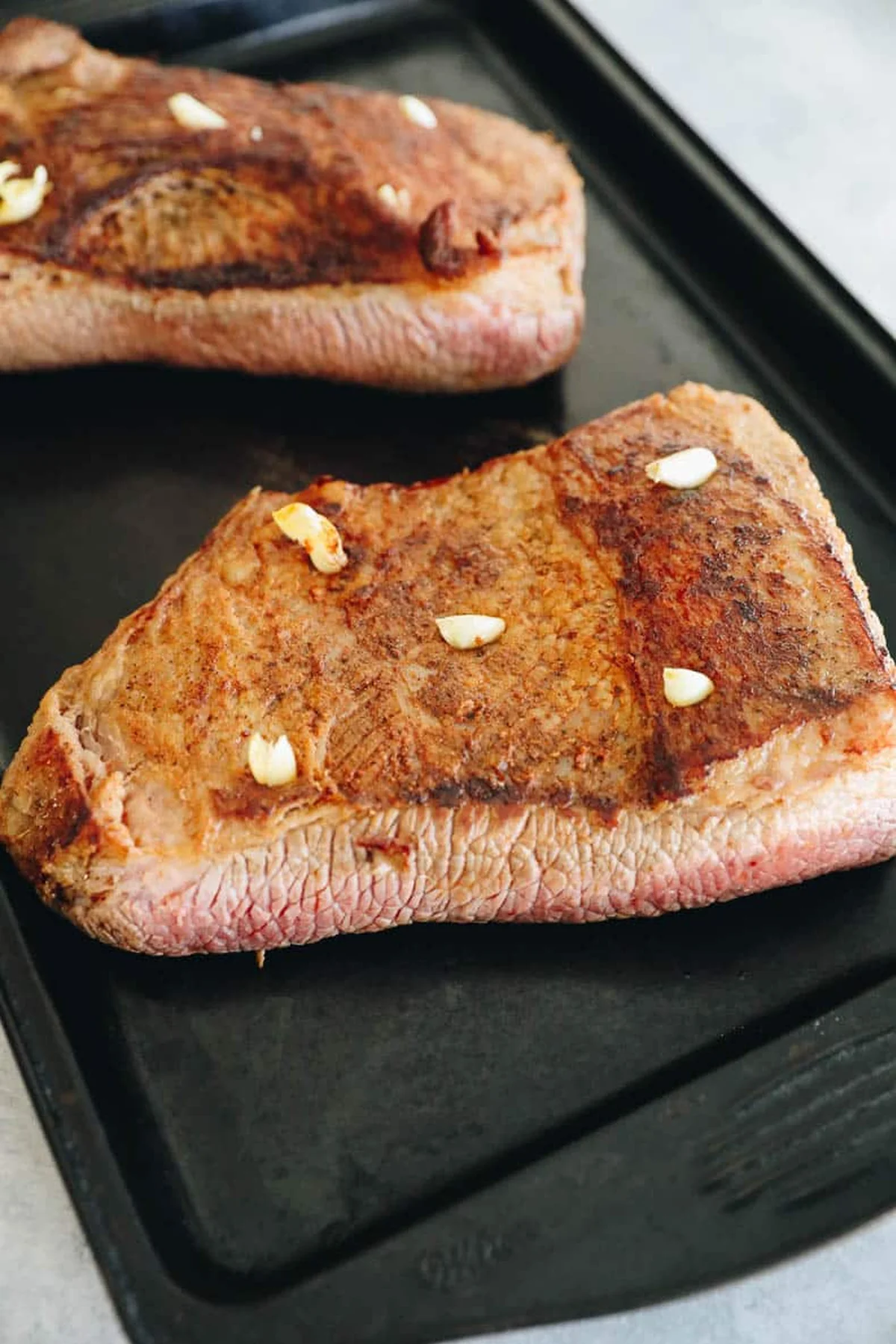
Preheat the oven to 325°F (165°C). If the brisket doesn’t fit in your pot, slice it in half — I always do, and it sears way better in two pieces. Heat 1 tbsp of the oil in your dutch oven over medium-high heat and sear the meat until it’s nicely golden, 3–5 minutes per side. Repeat with the second piece. Then make 10 small cuts all over the brisket and tuck the garlic cloves into them. If a few fall out, no one notices.
3. Build the sauce
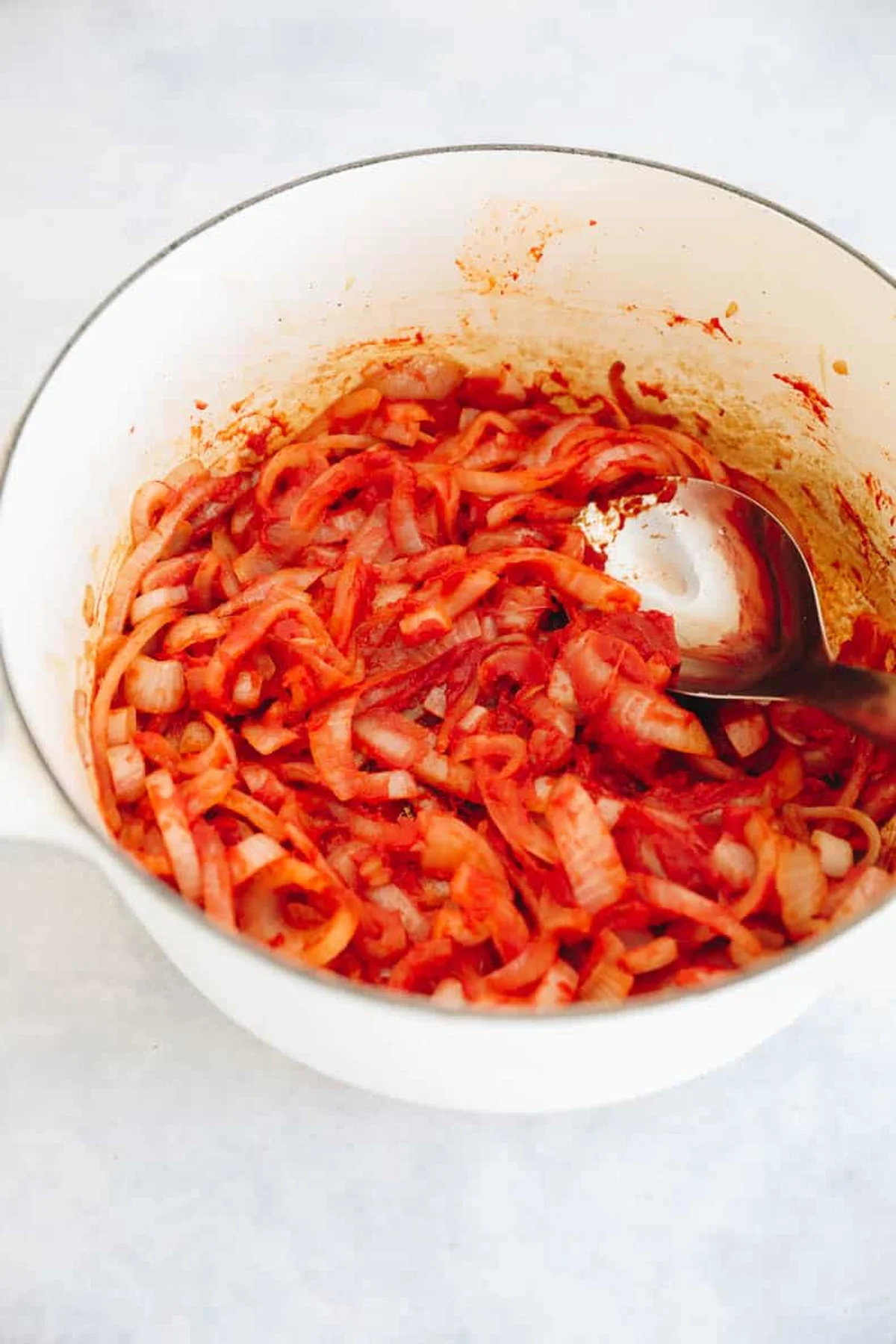
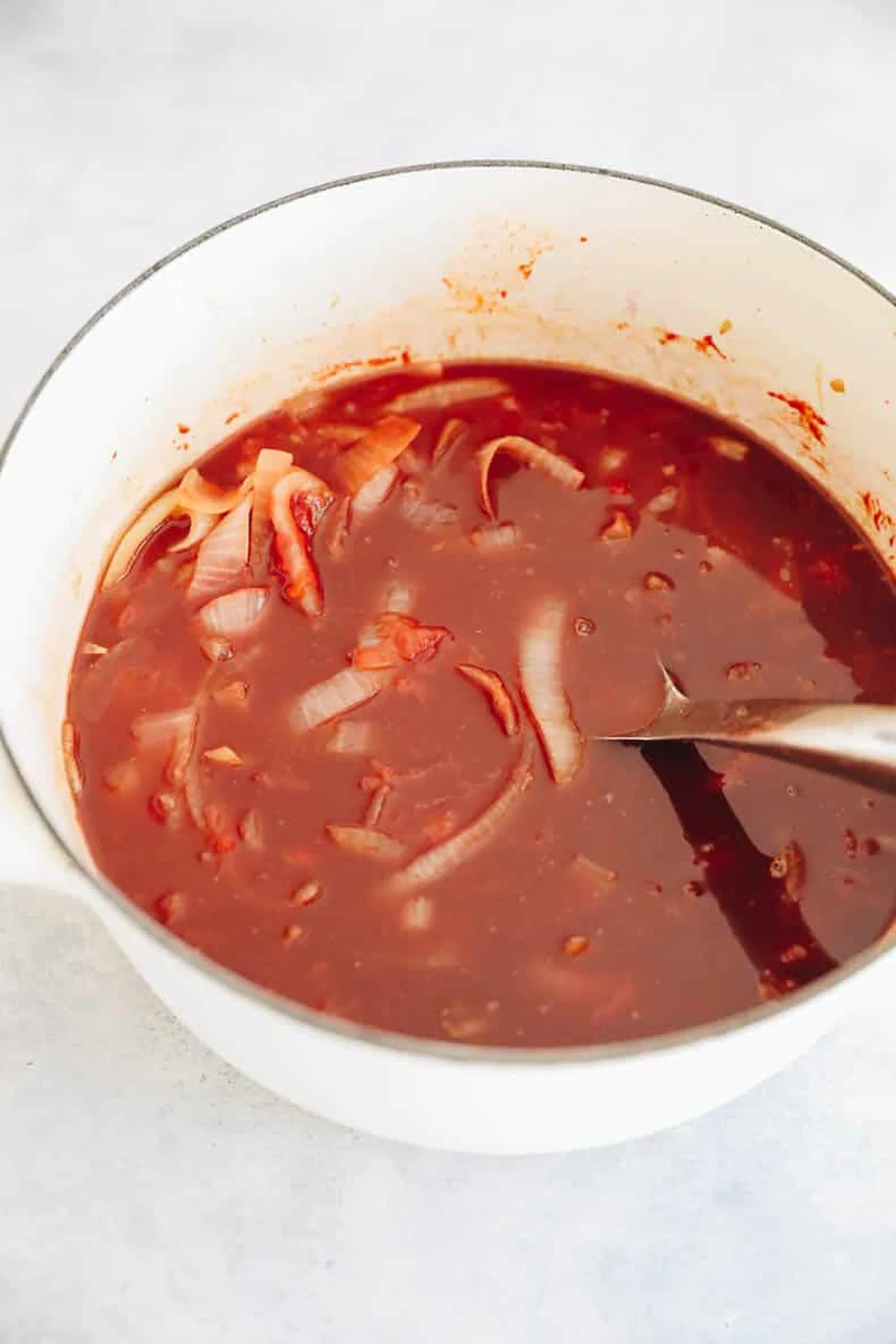
Add the remaining oil to the pot and turn the heat to medium-low. Stir in the sliced onions and let them cook 7–10 minutes, until they start to soften and catch color. Stir in the tomato paste during the last minute and scrape up all the browned bits on the bottom of the pan — that’s flavor, not cleanup. Add the diced tomatoes, maple syrup, beef stock, and wine, and give it a stir.
4. Slow cook
Nestle the brisket into the sauce so it’s mostly covered, top it with the carrots and potatoes, and tuck the fresh herbs around the edges. It will be a tight squeeze. Cover and cook for 3 to 3½ hours. Check with a meat thermometer at the 3-hour mark: it’s done when the internal temperature hits 195–205°F (90–96°C).
5. Rest, slice, serve
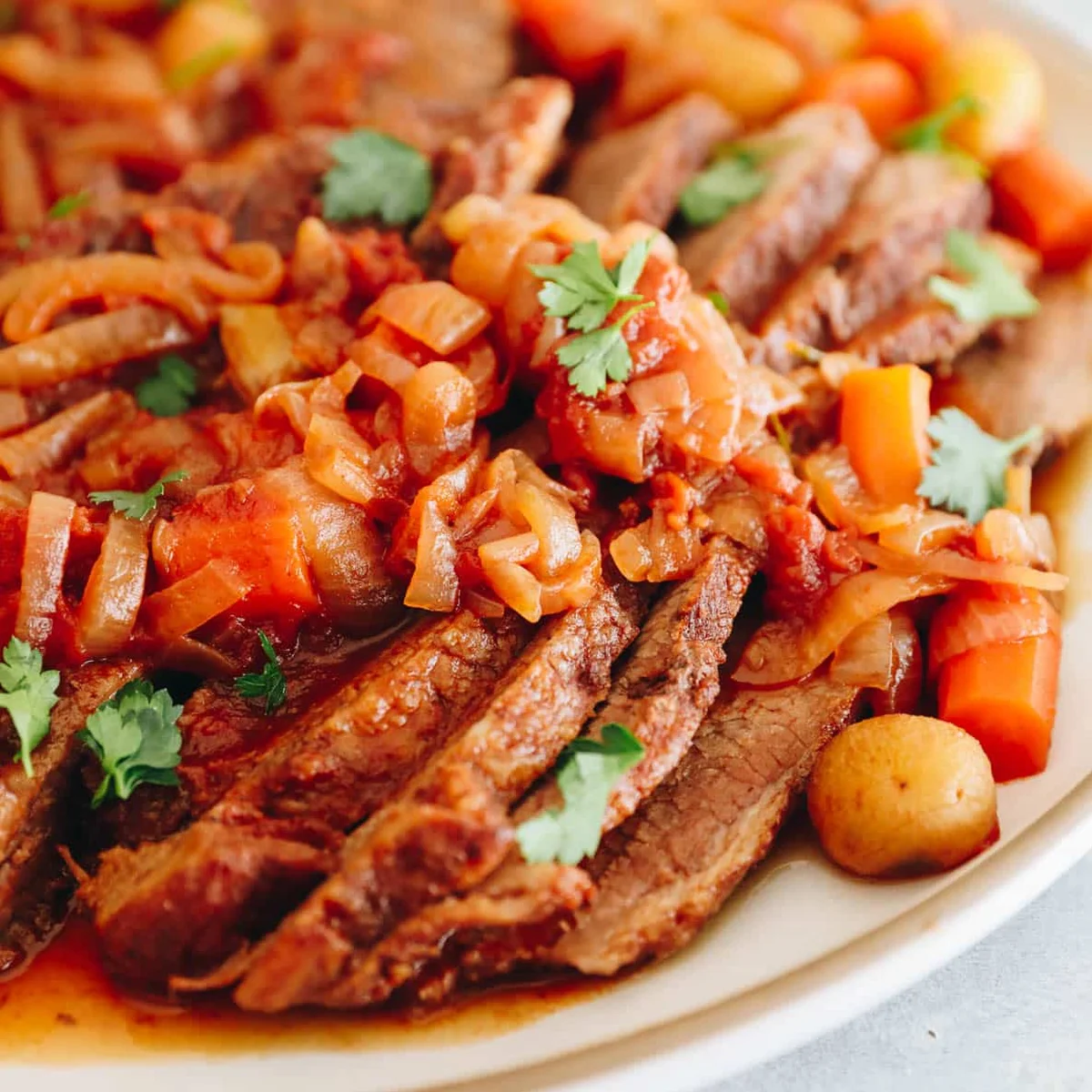
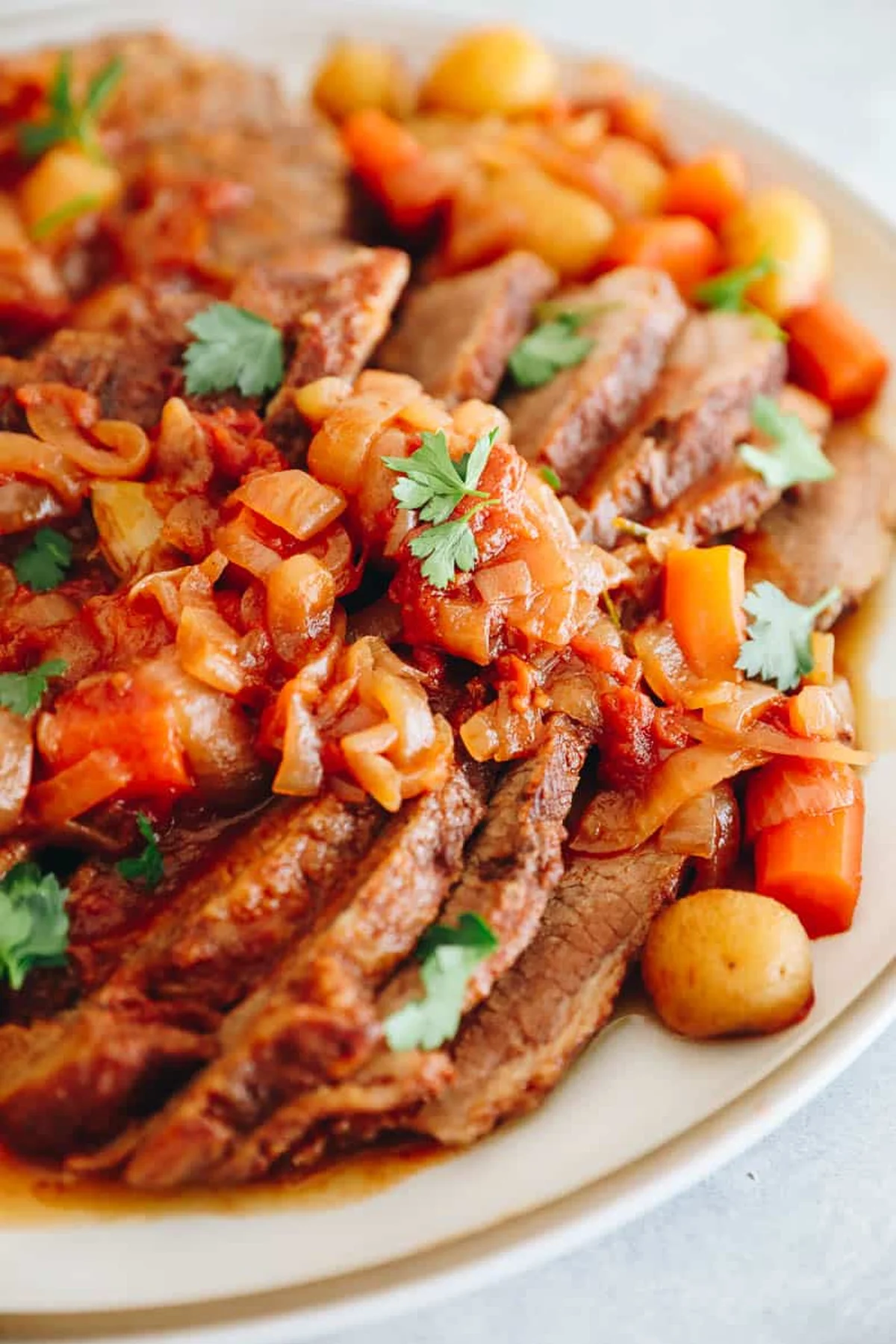
Take the brisket out of the sauce and let it rest for 20 minutes. Pull out the herb sprigs and discard. Slice against the grain with a sharp serrated knife (a bread knife is great for this), then put the slices back in the sauce or spoon it generously over the top. Serve with the cooked carrots, potatoes, and as much sauce as you can manage.
Questions, answered
Do I really have to dry brine it? It’s optional, but I’d strongly recommend it — it builds a lot of flavor and keeps the meat tender.
Can I double the recipe? Sure. Just make sure your pot is big enough, or use a large aluminum pan tented with foil, which is what I do when I’m cooking a big one.
No dutch oven? Any oven-safe pot with a lid works, or a big pan covered with foil.
Can I use a slow cooker? Yes. Sear the brisket and caramelize the onions on the stovetop first, then put everything in the slow cooker for 6–8 hours.
How do I slice it? Against the grain, with a serrated knife. I find it easier to see the grain before the meat is cooked, so I take a photo first and use it to orient myself.
Should I trim the fat? Leave about ¼ of the fat cap on. It feeds the meat while it cooks, and you won’t end up with a slab of blubber on top.
Storing it
Keep leftovers in an airtight container in the fridge for up to 5 days. Reheat in the oven, on the stovetop, or in the microwave. You can also freeze it: pack it in a covered aluminum baking dish, seal it tightly with foil and plastic wrap, and thaw it overnight in the fridge before reheating.
Trade-It Tip: No smoked paprika? Sweet paprika works — you lose the smoke, but the color and sweetness stay.
Back when I worked the line, we called this kind of dish a “slow money” recipe: a little bit of work spread over a day, and a result that looks like you all day. This one’s the good kind of simple. It doesn’t fit a Tuesday night — but it fits a holiday, and that’s what it’s for.
If it doesn’t fit a Tuesday night, it doesn’t get published.